
You’re giving people the tools from day one to be able to empower themselves, to build their own futures.

Published in
Social entrepreneur Felix Brooks-church’s mission is to eliminate malnutrition. His “dosifier”, a machine that fortifies flour with essential nutrients at minimal cost, reaches more than 25 million people across East Africa. With Rolex’s support, he is now expanding operations massively into Ethiopia.
All videos

2025

2022
Felix Brooks-church co-founded the non-profit organization Sanku with a goal in mind: to transform millions of lives by providing communities with the vital nutrients their diets were missing. For more than a decade, Sanku has been installing dosifier machines into mills in Tanzania and Kenya, delivering precisely measured doses of essential micronutrients such as iron, B12 and zinc into grains during the milling process. Their innovative business model allows them to do so at minimal cost to Sanku, the millers, or the people who eat the flour, who are in need of the micronutrients.
Now, with the continued support of the Rolex Perpetual Planet Initiative, Sanku is rapidly expanding into Ethiopia, with the potential to reach many millions more whose health and development is being significantly impacted by lack of proper nourishment. This expansion is helped by the launch of a micronutrient blending factory in Tanzania, which already produces enough premix to enrich over five billion plates of food every year. It is a huge achievement, pushing Sanku further towards its aim of providing the nutrients essential for a healthy life to Ethiopia’s population.

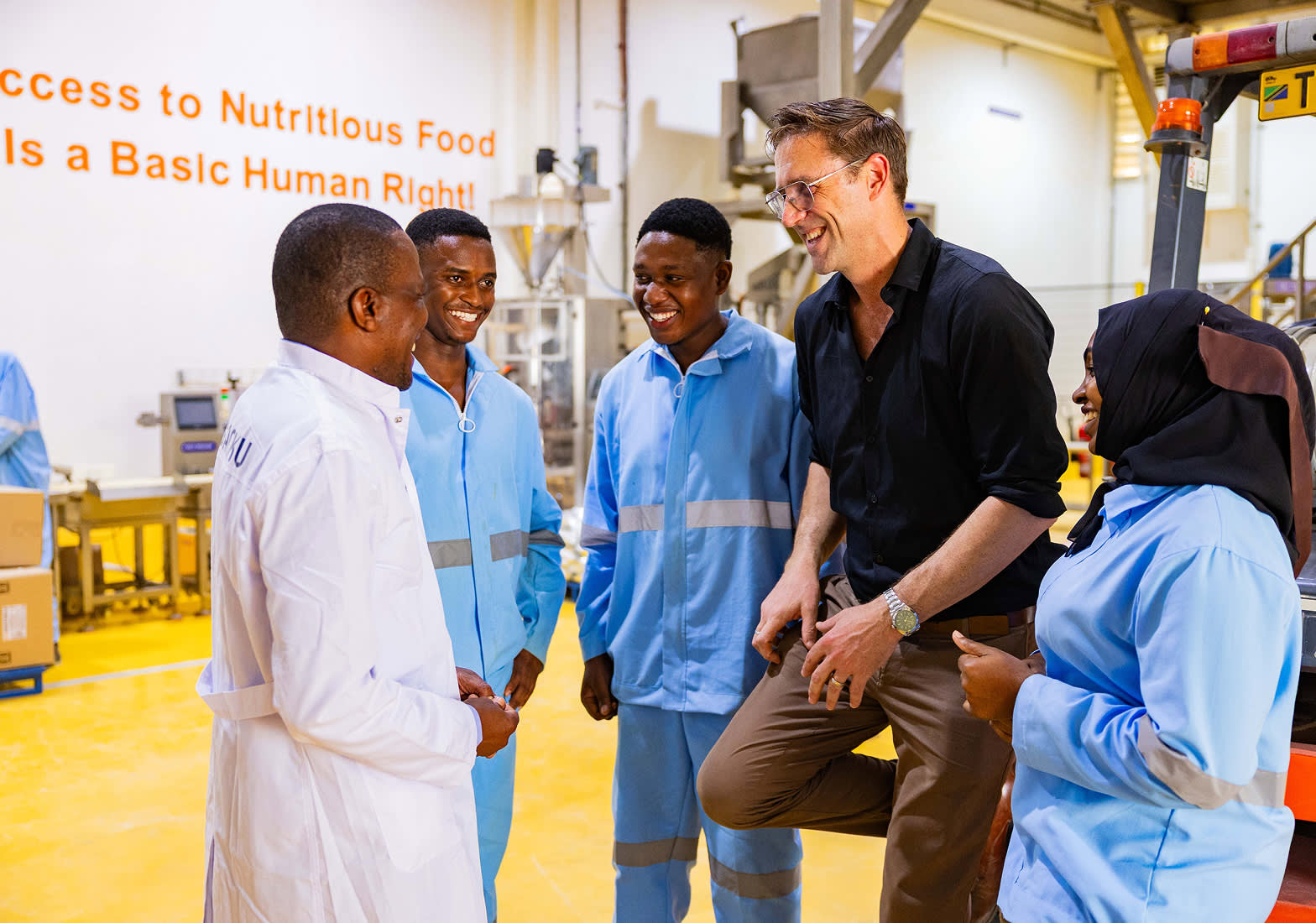
When Brooks-church first brought the dosifier to Tanzania, they were made to fit small-scale mills operating at village level, serving those most in need. But as the organization grew, he realized even bigger manufacturers were not fortifying their products, or were doing so with poor-quality nutrients. “They’re not going to have any health benefits. Every time a miller is milling and not using quality nutrients, we’re robbing ourselves of the opportunity to save a life,” says Brooks-church. Sanku continued developing their dosifier machine to fit every mill, no matter the size. They also set about building the micronutrient factory on the ground in Tanzania. “Just like the dosifier, there was no blueprint.” But by applying the same perseverance and creativity that has come to define the organization, Sanku now has a factory sourcing many ingredients locally – making it cheaper than ever to supply genuinely nutritious food. The cost per person per year is approaching just 10 cents. “Any savings we’re able to achieve, we pass on to the customer, the consumer, which is the miller,” explains Brooks-church. The factory is also providing training and employment opportunities that will impact peoples’ lives for years to come.
You’re giving people the tools from day one to be able to empower themselves, to build their own futures.
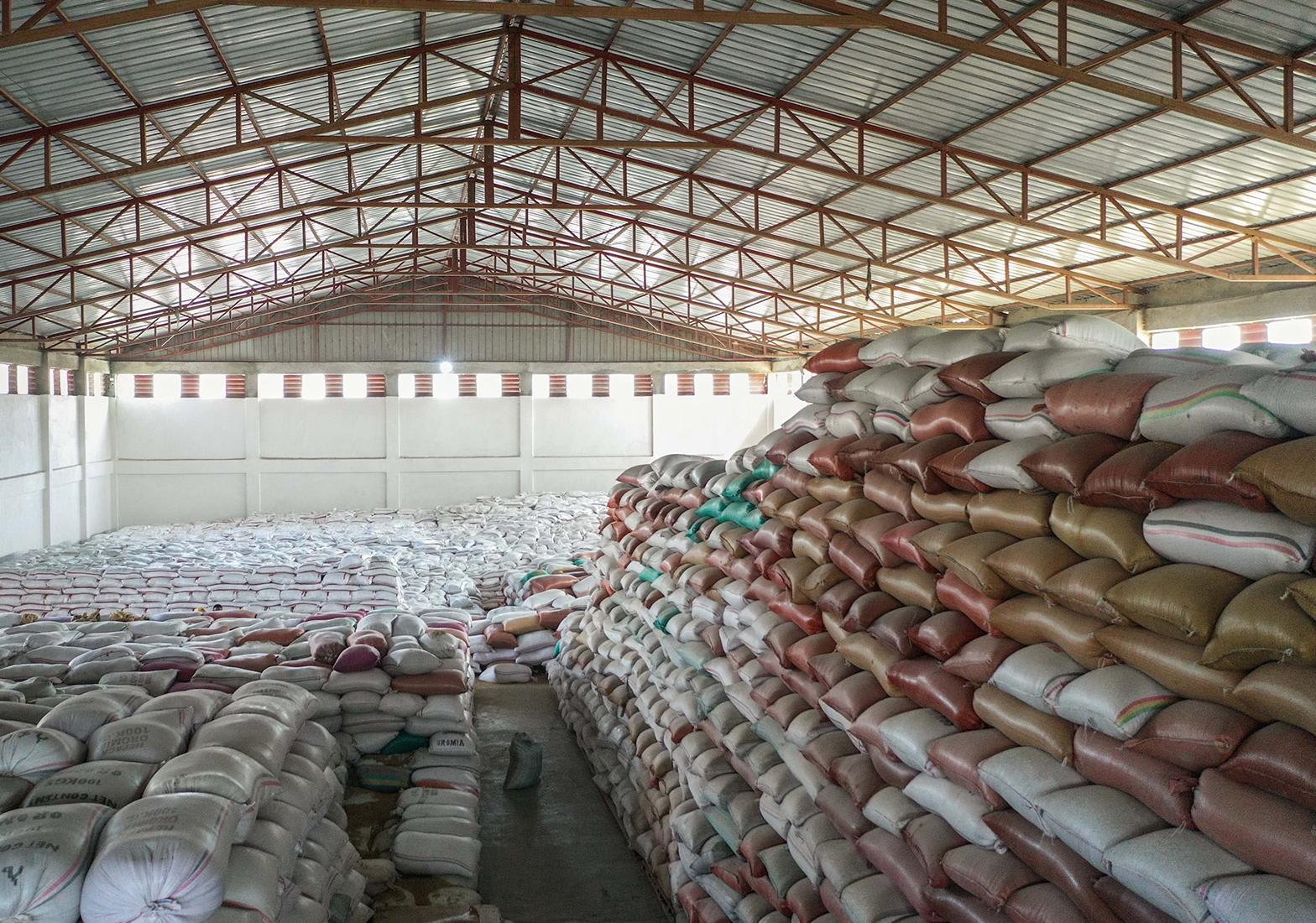
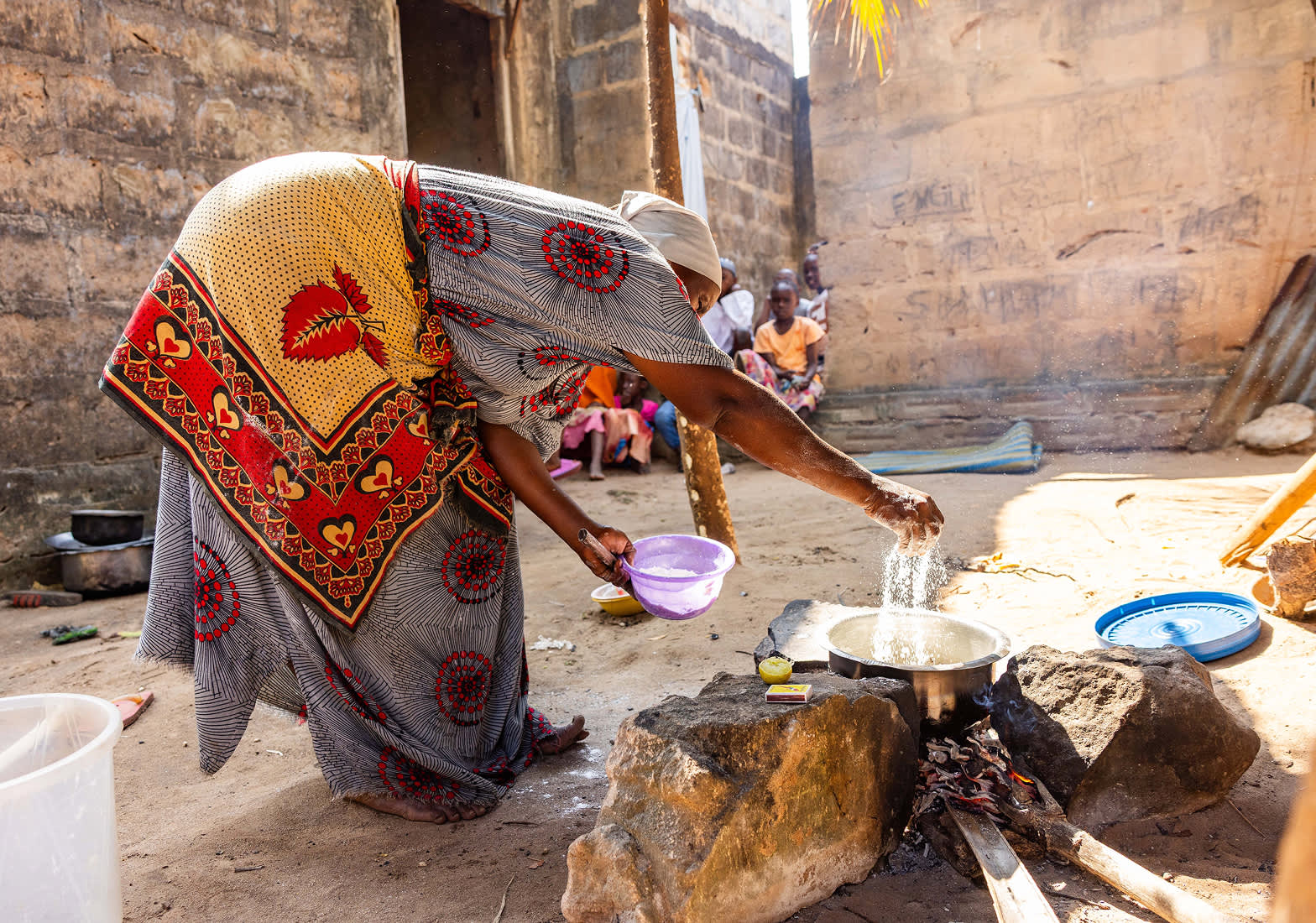
In Tanzania and Kenya, poorer communities that are most affected by malnutrition tend to source their staple food, maize flour, from village mills. These are often no bigger than a typical bedroom. In contrast, in Ethiopia the main commercial crop is wheat, with only 364 large scale mills feeding 40 million people. Having an exact number is an exciting prospect for Brooks-church. In a country facing many challenges, including food instability caused by conflict, each installed dosifier represents a tangible positive change. “You’re giving people the tools from day one to be able to empower themselves, to build their own futures,” he says. Equipping a mill with a dosifier is still Brooks-church’s favourite part of the job. Within just a few hours, he gets to watch mothers buying newly fortified flour which will nourish them and their children.
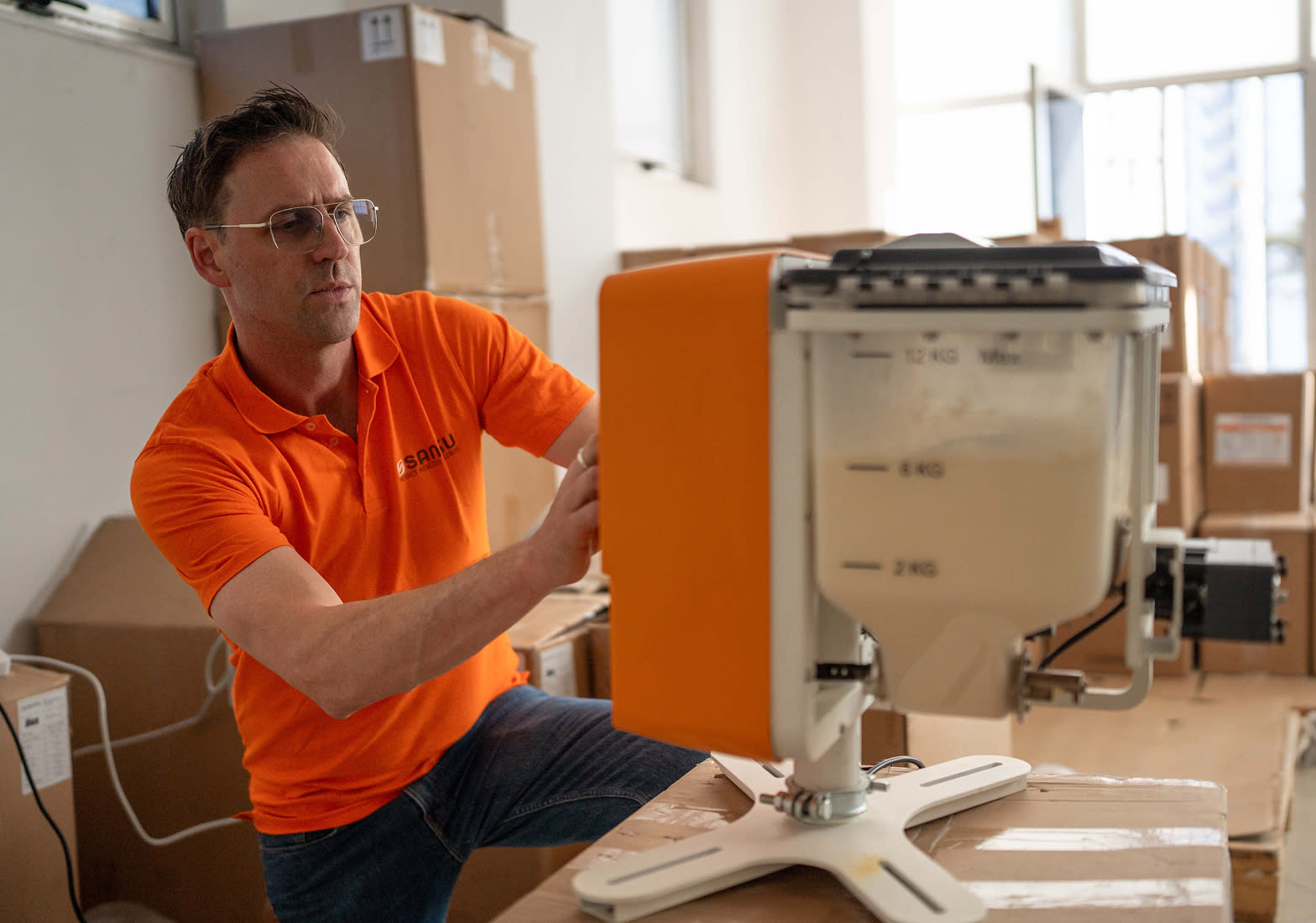
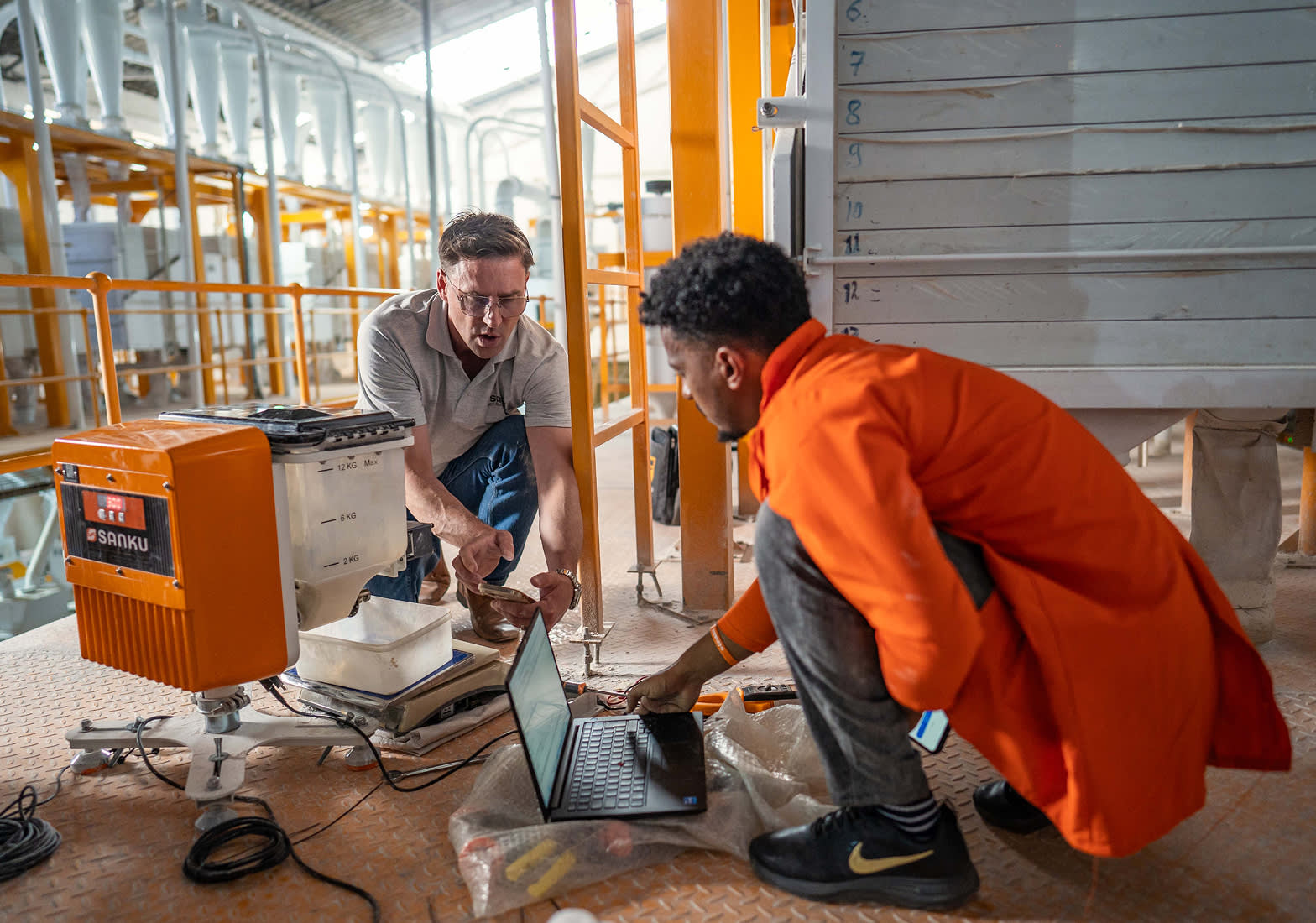
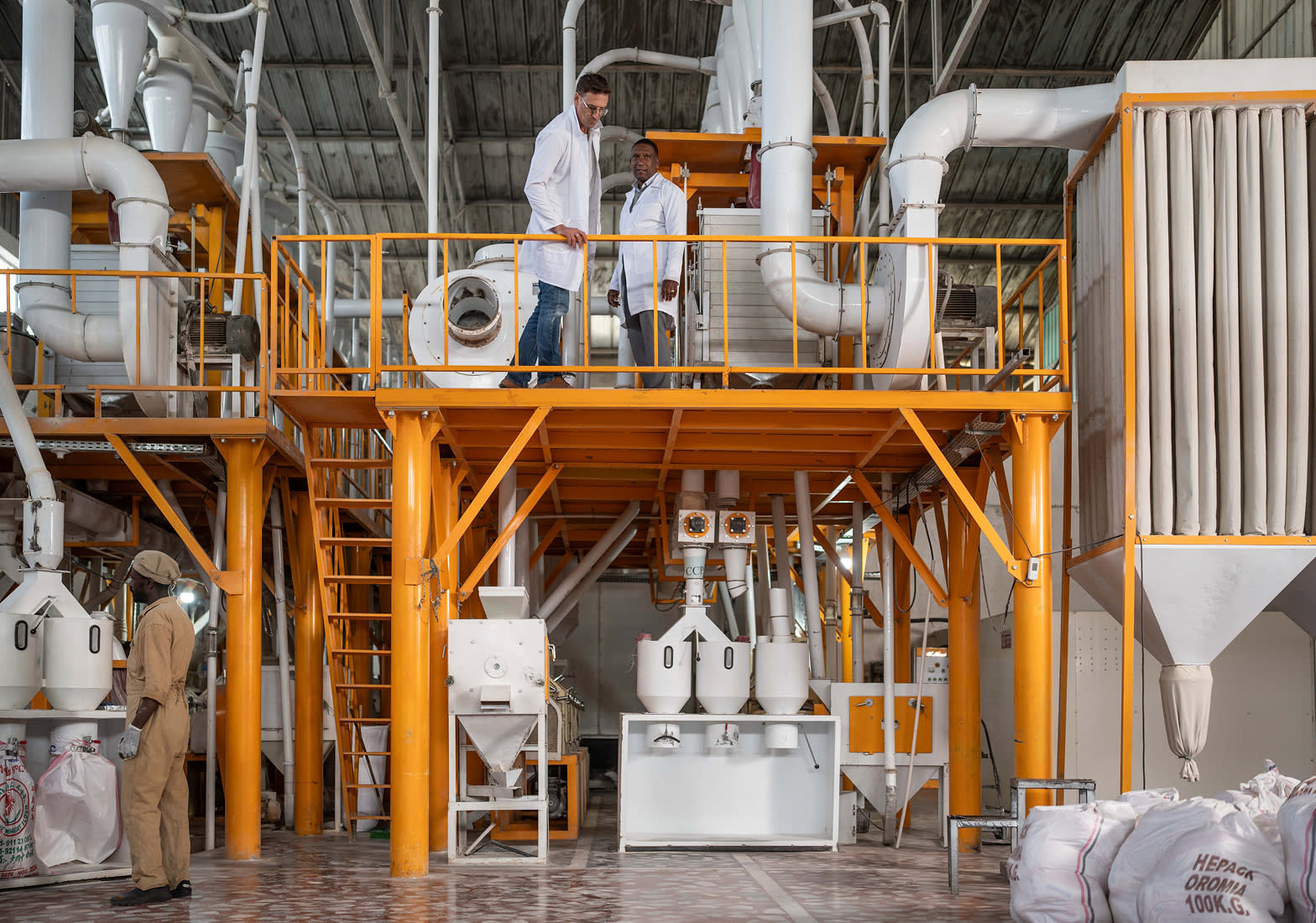
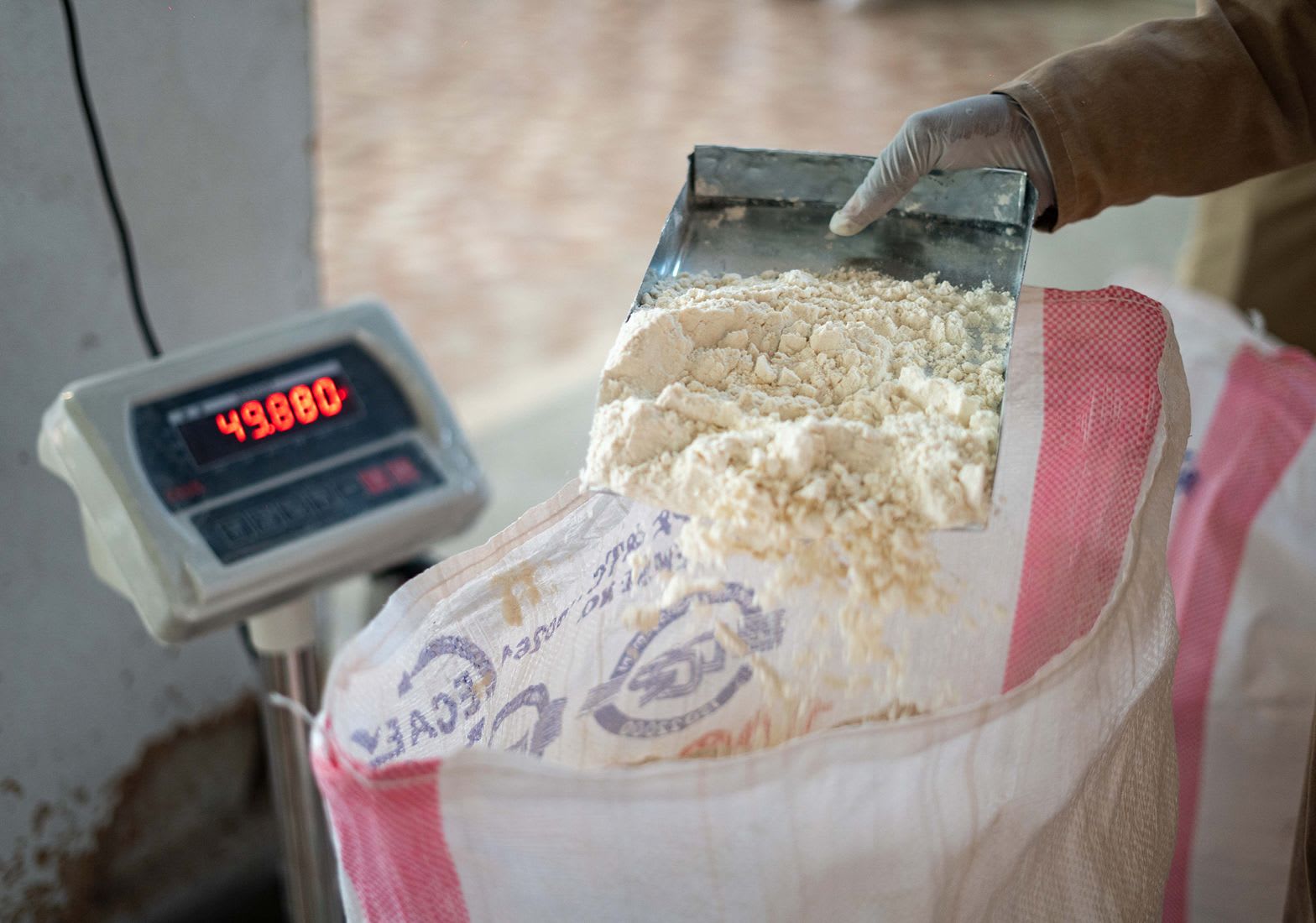
Sanku has also been able to keep improving its dosifier to make it an even more effective and appealing product, one easy for millers to operate. It can now work with wheat as the grain, and its premix compartment is protected from UV light that spoils the nutrients. The dosifier can also detect the level of premix automatically, and if it is low – or if there are any errors – both the miller and Sanku are alerted via a cellular connection. This ability for Sanku to provide ongoing ground support is critical in Ethiopia, where fortification has never been done before.

The move into Ethiopia, and all the work that has gone into making it happen, is a major accomplishment on the incredible journey that Brooks-church and Sanku have taken to bring proper nutrition to millions throughout East Africa. It is a world away from Nepal, where, on a dirty floor in a tiny metal shop in the foothills of the Himalayas in 2010, Brooks-church began prototyping the dosifier based on simple sketches by Stanford University engineers. For two years he developed the prototype, until he finally landed on a machine that could dispense nutrients into milled grains in a way that was convenient and controllable. “There were high fives, there were tears, there was just a sense of… wow,” he recalls. It was such a momentous achievement that he went on to name his company after the Nepalese village where it all started: Sanku.

We don’t want to end malnutrition in one village, or one country. We want to end malnutrition. We’ve always had the goal of reaching 100 million people by 2030.
“Every time I install a dosifier, I have to think about the first one that ever worked, the first one that made Sanku what it is,” says Brooks-church. “I get those same feelings, almost the same tears and the same enjoyment of success every time we install one.” He already has his eye on the next milestone. With Rolex behind it, Sanku plans to expand across even more of East Africa. “We don’t want to end malnutrition in one village, or one country. We want to end malnutrition. We’ve always had the goal of reaching 100 million people by 2030,” Brooks-church points out. It will take him even closer to his ultimate aim of transforming futures by ending malnutrition.