
As a result, my research projects were no longer funded, and my papers were rejected. It was extremely difficult.

Published in
Neuroscientist and Rolex Awards Laureate Grégoire Courtine has dedicated his life to the treatment of spinal cord injuries. With the help of his latest “test pilot”, his revolutionary technology is achieving results that could change the lives of millions.
All videos

2025

2023

2019
Sometimes random encounters can have far-reaching implications. Thirty years ago, as a physics student with a passion for rock climbing, Grégoire Courtine met a professor of neuroscience at the foot of a cliff. Their discussion about how the brain controls physical movement was so inspiring for Courtine that he switched his area of study to neuroscience.
In 2004, armed with a PhD in neuroscience, Courtine moved to Los Angeles to take up a post-doctorate position at the University of California, Los Angeles (UCLA). The laboratory where he worked was collaborating with the Christopher and Dana Reeve Foundation, and Courtine recalls famed actor Christopher Reeve addressing a team of scientists, telling them: “When you leave your laboratory tomorrow, I ask you to stop by the rehabilitation room to see the patients struggling to take a step and think, ‘What am I going to change to make their lives better?’ That’s your mission, and never forget that.”

It was another life-changing moment for Courtine, who resolved “to invest the rest of my career in developing therapies for people suffering from paralysis”.
He spent the next eight years researching the effects of electrical stimulation on severed spinal cords. On 1 June 2012, he published a revolutionary paper outlining his findings, which showed he could potentially help paralyzed patients walk again. The results were featured on the front page of The New York Times.
However, in response, there was backlash from a disbelieving scientific community, casting doubt on the results and expressing scepticism that such an approach could ever be effective. “As a result, my research projects were no longer funded, and my papers were rejected. It was extremely difficult,” recalls Courtine.
As a result, my research projects were no longer funded, and my papers were rejected. It was extremely difficult.
With fateful timing, less than a month after Courtine’s paper was published, he had another encounter that would prove to be pivotal: neurosurgeon Jocelyne Bloch came to his laboratory in Lausanne to study his results. Astounded by what she had seen, she resolved to help him apply his research in humans.

The pair began work on a system to restore motor functions to people with chronic spinal cord injuries. Using an implanted pulse generator, they were able to deliver bursts of electrical stimulation at specific locations on the spinal cord, timed to coincide with the intended leg movements. To their great satisfaction, the process worked, and their patients were able to stand and even take some steps for the first time in years.
But, while the system was a phenomenal success, it was also cumbersome to operate in daily life: users had to press a button each time they wanted to trigger the electrical stimulation.

With the help of Courtine’s Rolex Award, he and Bloch began work on a “digital bridge”, a revolutionary piece of technology that would convert thoughts into action. Implants on the brain would measure signals, which would then be transmitted to the pulse generator, triggering the required electrical impulses.
They tested the digital bridge on a patient with an incomplete spinal cord injury, who still had some residual movement. The results were hugely encouraging, but there was no guarantee that the process would work on someone with a complete lesion of the spinal cord.

Courtine calls the patients in his study “test pilots”. They must be brave enough to undergo experimental treatment, and sufficiently motivated to invest huge amounts of time and effort in the rehabilitation and exercise the process requires.
In January 2011, Suzanne Edwards was on a surf camp in Morocco when a balcony railing she was leaning against collapsed; she fell 20 feet onto a marble floor. The accident caused her spinal cord to be severed. Aged just 23, she was paralyzed from the waist down.
Fourteen years later, following a rigorous application process, she became Bloch and Courtine’s latest test pilot, committing to move to Switzerland for six months. Bloch performed surgery to place the implants on her brain and spinal cord. After recovering from her operation, the moment arrived to see if the digital bridge would link Suzanne’s thoughts to her movements.
It worked. She took her first steps in 14 years.
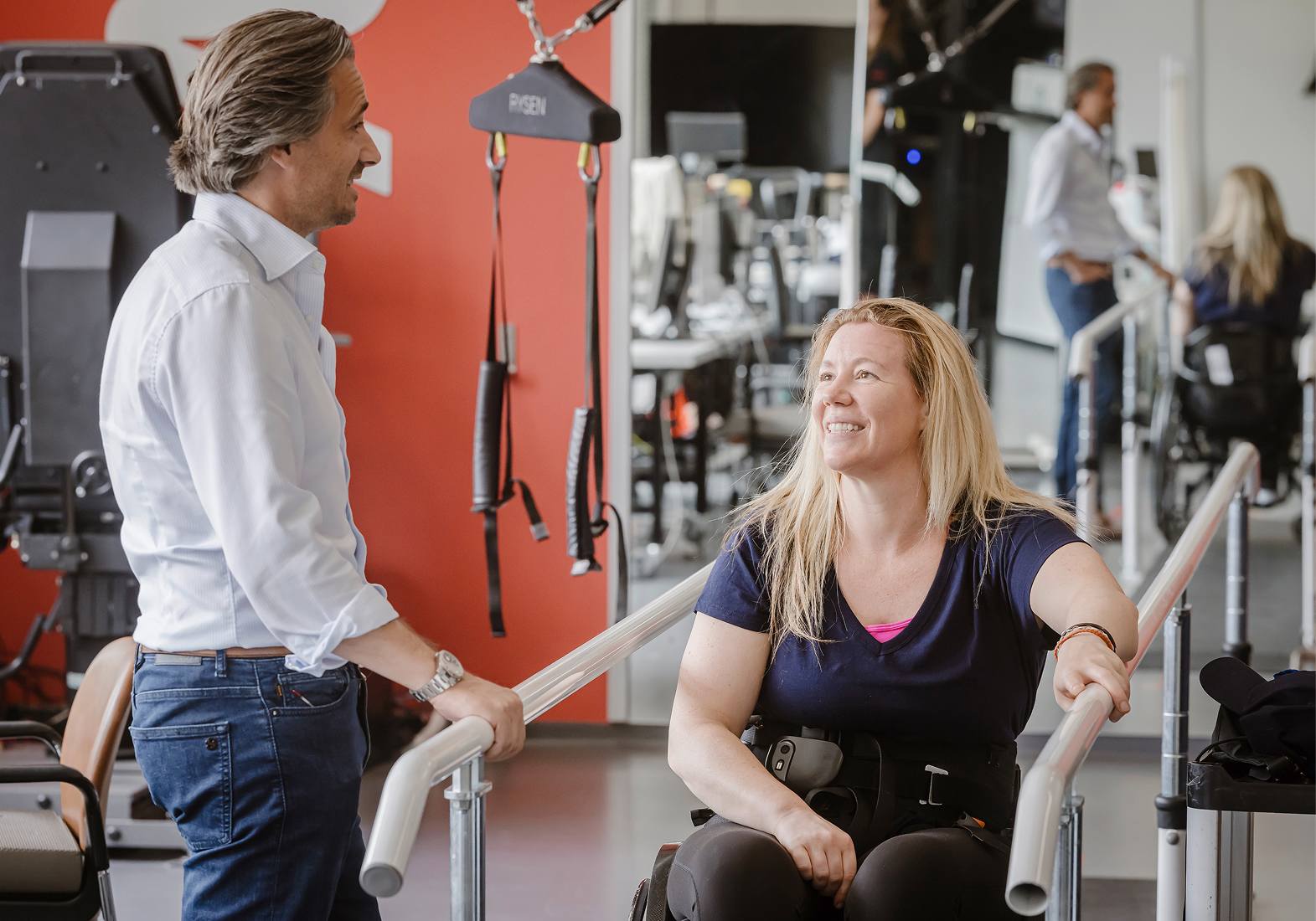
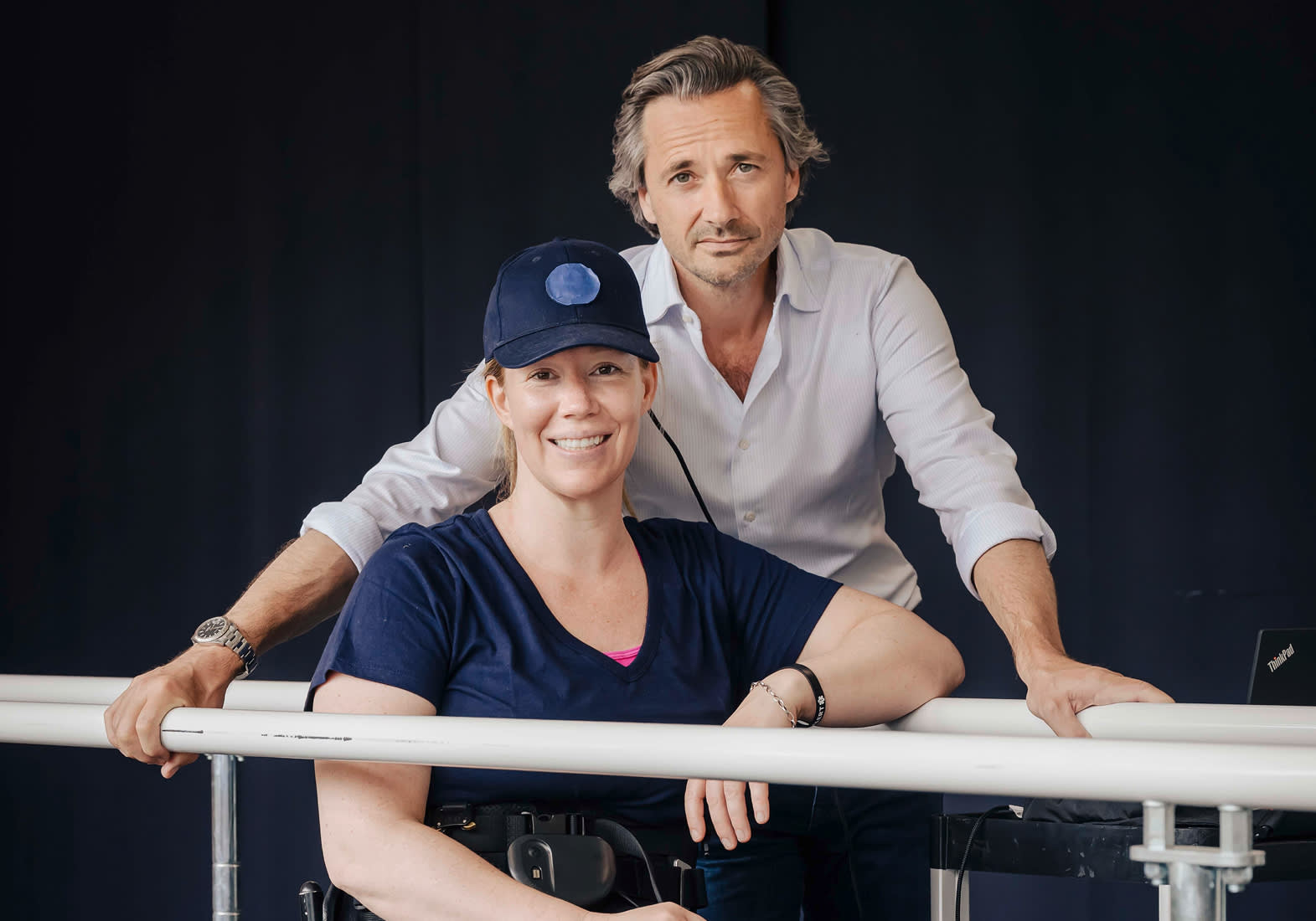
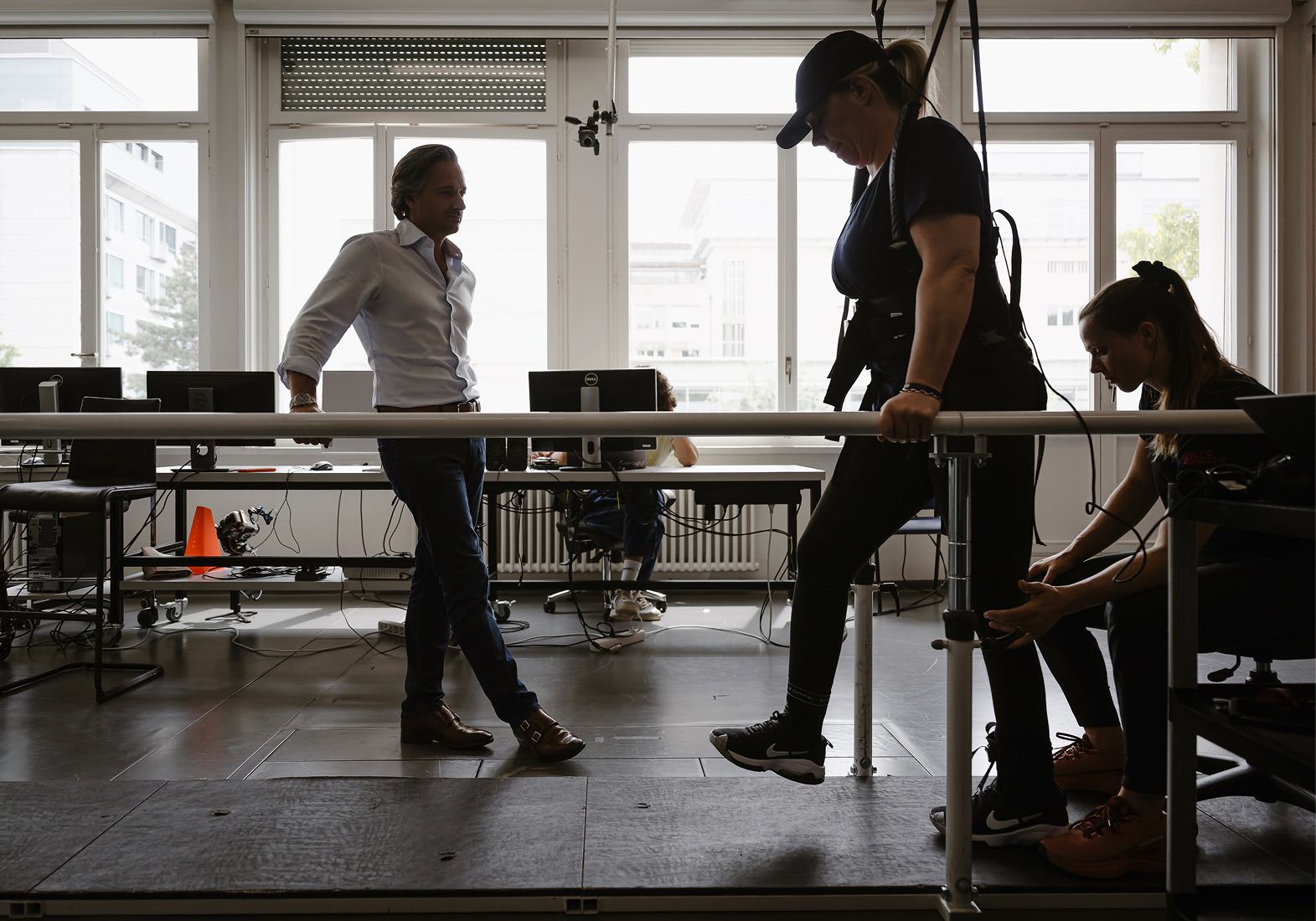
In the weeks since her surgery, Suzanne has trained intensely, pushing herself to her limits. Her progress has been remarkable, to Courtine’s evident delight: “The greatest moment in my work is looking into Suzanne’s eyes when she’s struggling to take a few difficult steps, and then she realises she’s moving again. She sees that she’s making progress and the smile just lights up her face. For me, that’s the best reward of all.”

The things that I was once told I would never be able to do, now, suddenly, are possible. My future feels strange. It feels exciting.
Supported by the Rolex Perpetual Planet Initiative, Courtine is determined to continue to push back the limits of science to help the 20 million people worldwide suffering from spinal cord injuries. But his aspirations extend further than that. He and Bloch have begun to research the possibility of using the technology to treat people with Parkinson’s disease, or those who have had a stroke. The future is filled with possibilities.
The same is true for Suzanne, who is getting used to an unfamiliar feeling: “The things that I was once told I would never be able to do, now, suddenly, are possible. My future feels strange. It feels exciting.”