Shortcuts

Think like an ocean
Mission Blue
Published in
Through its Perpetual Planet Initiative, Rolex is supporting ocean conservation non-profit Mission Blue in its goal to create a global network of Hope Spots, areas that deserve protection as they are home to vital marine ecosystems.
All episodes
Galápagos expedition: Episode 1 – 2023
A blueprint for the planet
Galápagos expedition: Episode 2 – 2023
Diving deeper
Galápagos expedition: Episode 3 – 2023
Passing the torch


A unique living laboratory
The Galápagos Islands are a place like no other. Their abundant and unique ecosystems are home to species of plants and animals that cannot be found anywhere else on Earth. When legendary oceanographer Sylvia Earle first visited the archipelago in 1966 and took that initial, magical trip beneath the waves, it was “the sharkiest, fishiest place” she had ever been. Yet, what makes it special also makes it vulnerable. As more people discovered the islands, invasive species were introduced, local resources came under increasing pressure, and delicate marine ecosystems were damaged by fishing practices.

While 97 per cent of the land in the Galápagos was protected, the surrounding ocean did not attract the same attention. With one of the planet’s true living laboratories at risk, Sylvia Earle chose the Galápagos Islands as one of her first Mission Blue Hope Spots; somewhere that scientists and local communities would work together to understand and protect the oceans’ health. This gave international visibility to the establishment of the Galápagos Marine Reserve in 1998 − an area covering 133,000 square km (53,282 square miles) of the islands’ waters, lagoons and streams, that would ensure they would be used sustainably for years to come by residents, tourists and fishers.

Fighting to survive
When he was a child, Manuel Yépez would go out with his dad in small wooden boats around the Galápagos Islands. Together they would catch hundreds of kilos of grouper together in just a few hours. Then, as he got older, his daily trawl got smaller and smaller. He began to illegally hook sharks that he could sell for significantly more. Now, however, he has a different mission in mind when he heads out onto the water. Rather than catch, he is hoping to conserve the archipelago’s marine life

Yépez is one of two Mission Blue Champions in the archipelago – an inspirational figure in the protection of a key part of the ocean, Earth’s Blue Heart. As he fishes and spends time on the water, he logs, samples and distributes information about the diverse marine life he comes across. These endeavours are vital for the scientists he now collaborates with, none more so than marine biologist and co-Hope Spot Champion Alex Hearn. Since they met in 2015, the two have become friends and research partners.
Despite the achievements of people like Yépez and Hearn, the Galápagos’ marine ecosystems remain threatened. Since the reserve was established, more residents and tourists have arrived at the islands to enjoy their incredible beauty and diversity. Overfishing has depleted many fish populations, wiping out sea cucumbers almost entirely. Pollution is now a major issue, and microplastics have been found in some of the most remote and pristine locations in the reserve. The Galápagos, too, are increasingly feeling the impacts of climate change. Alongside the challenges, however, researchers have discovered more about the complex migration patterns of the archipelago’s inhabitants − deserving of a deeper dive.

A blueprint for success
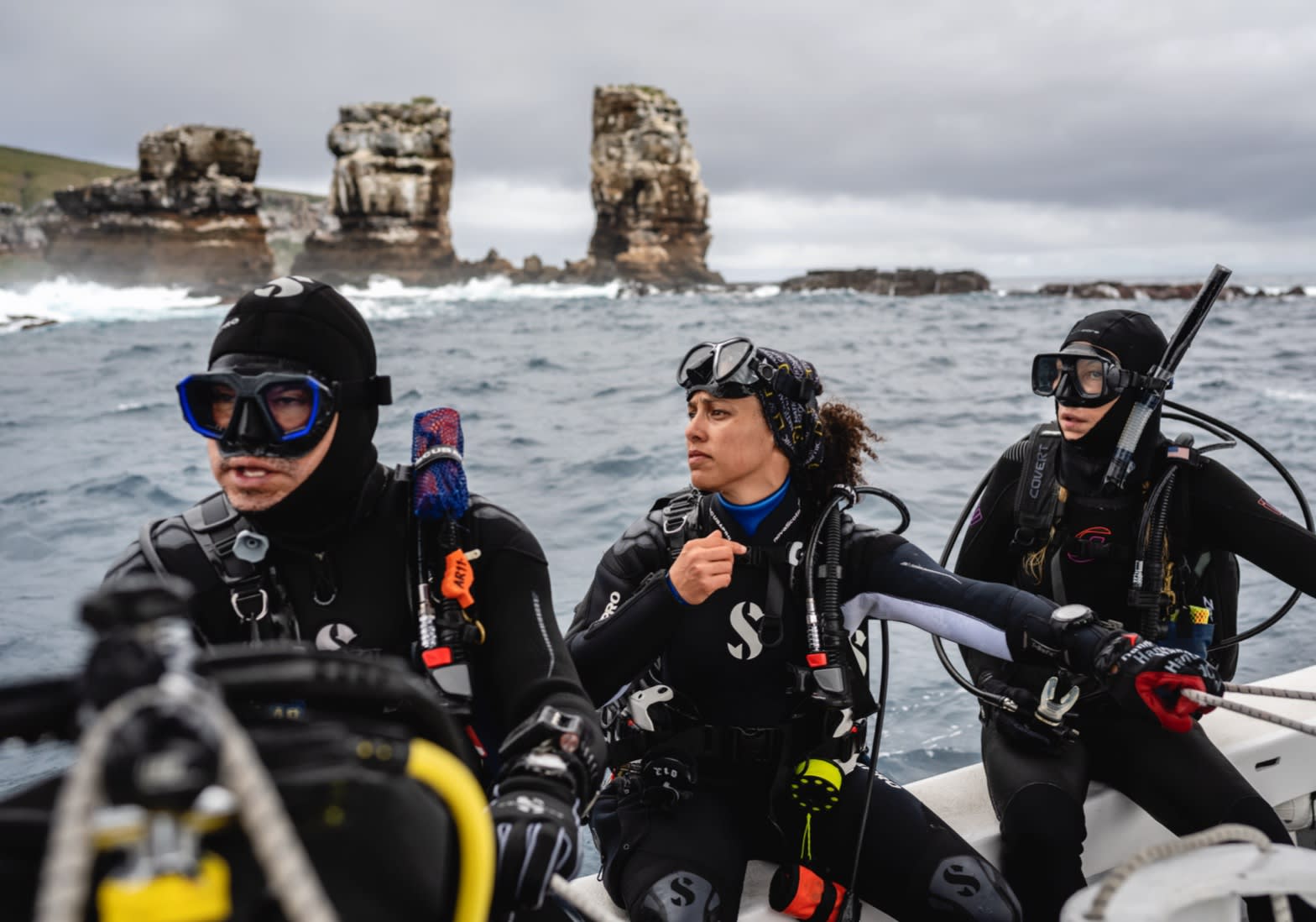
A quarter of a century from the creation of the Galápagos Marine Reserve, the time had come to take stock, collect new data, and identify the opportunities and hurdles ahead for the next 25 years. Led by Sylvia Earle and supported by Rolex’s Perpetual Planet Initiative, a multi-institutional team of scientists embarked on a two-week expedition around the Galápagos to establish a comprehensive and far-reaching overview of the marine ecosystem that has ever been done in the region.
With one of the planet’s true living laboratories at risk, Sylvia Earle chose the Galápagos Islands as one of her first Mission Blue Hope Spots.
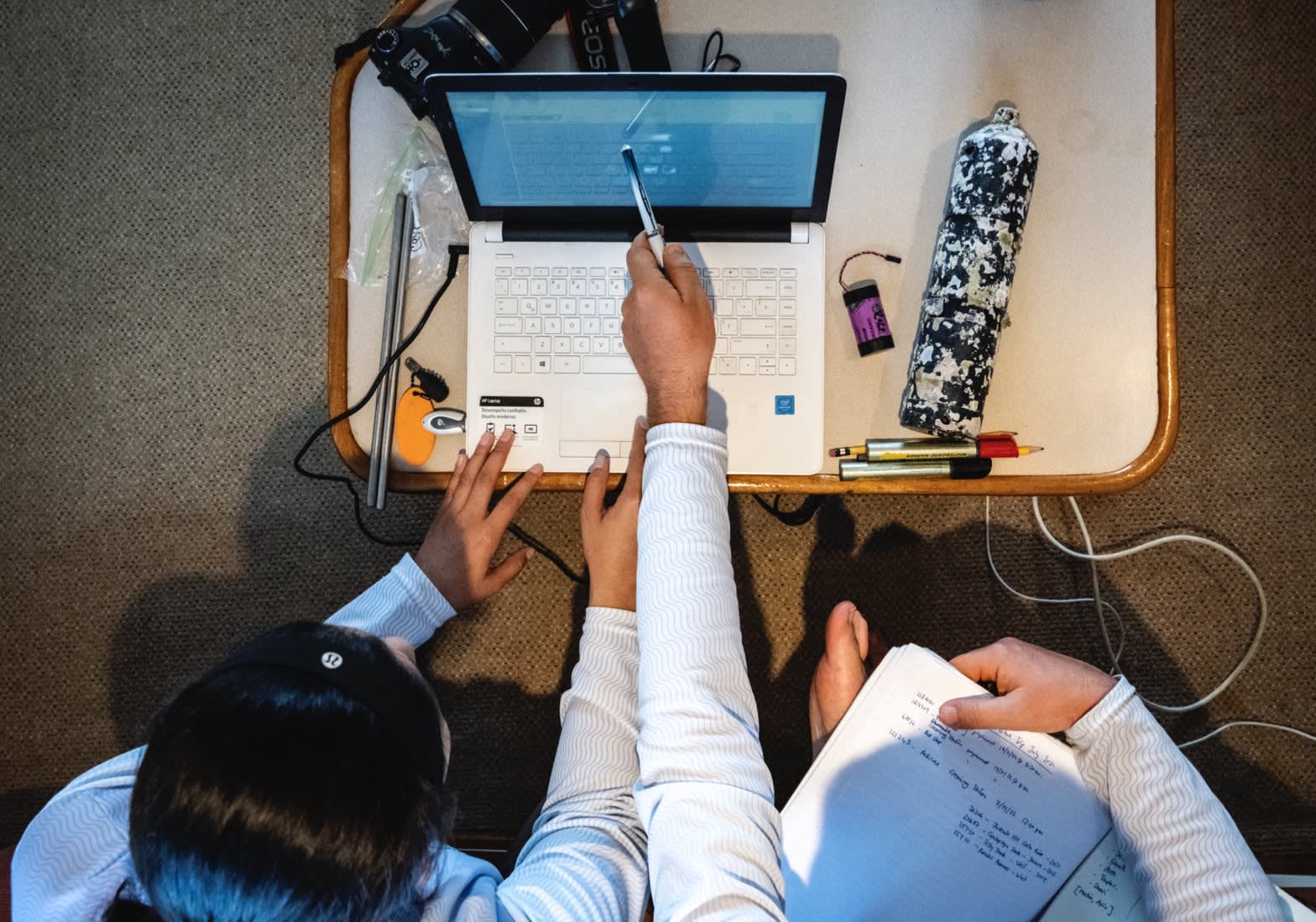
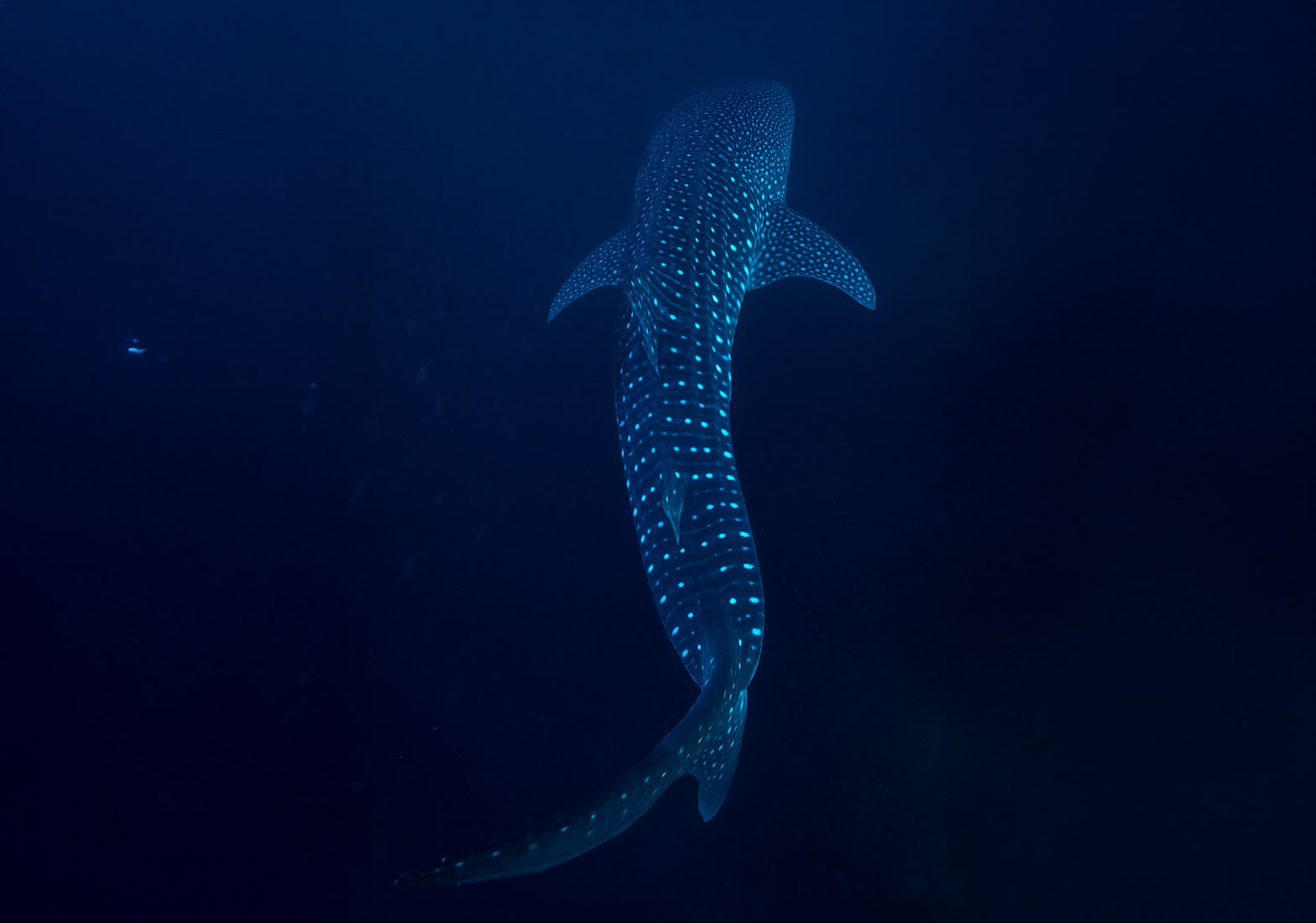
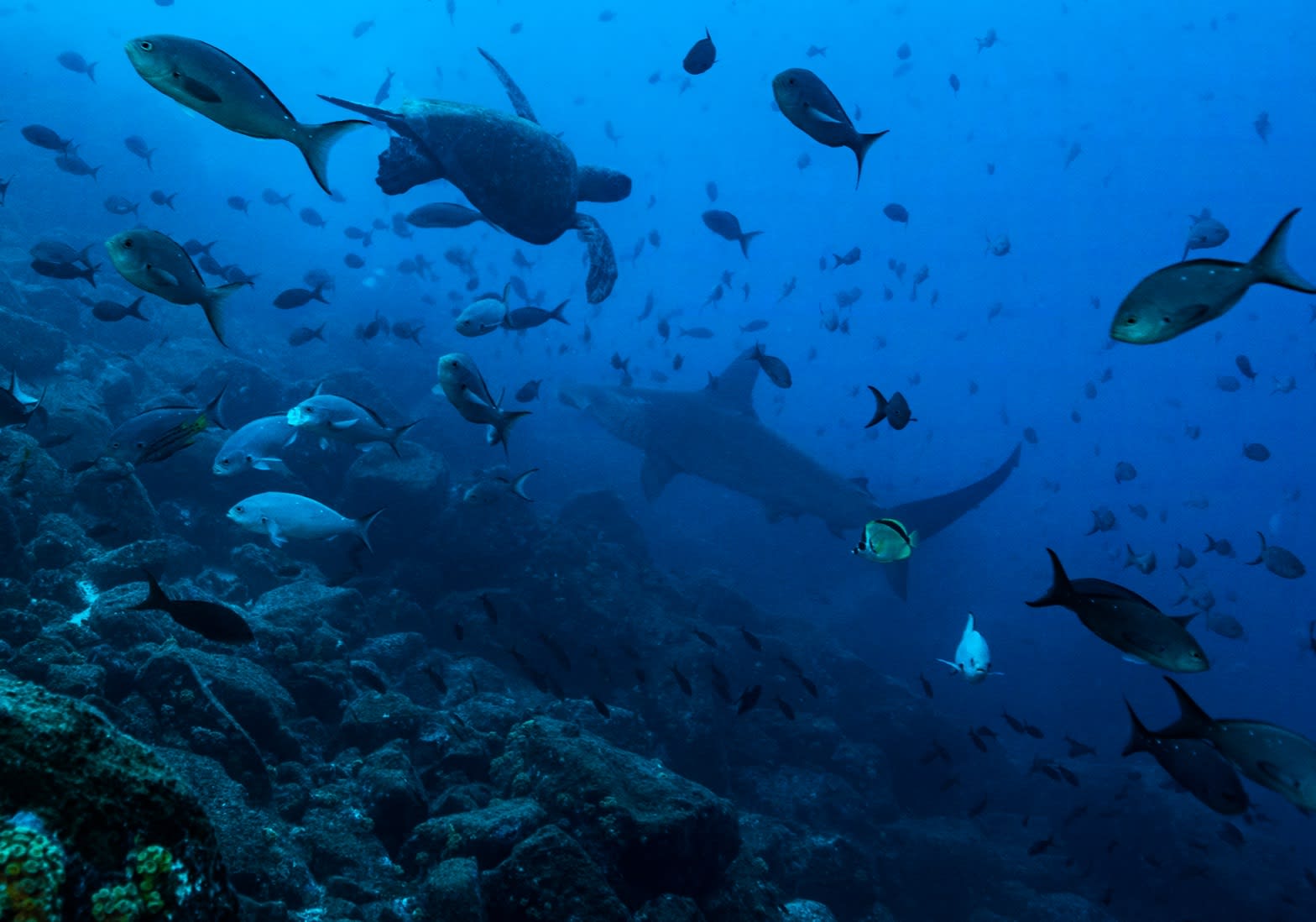
On the expedition, Yépez and Hearn continued their work, tagging tiger sharks and gathering data about a range of shark species − including potential nursery areas. As lead researcher onboard, Hearn dived and used state-of-the-art underwater video systems to measure populations of many forgotten species, including seahorses and the endemic slipper lobster. This will form a baseline for future surveys, allowing conservationists to check the progress of marine life around the archipelago. “We need to understand the population trends of some of the key species in the reserve, just to be able to answer the simple question: how is our reserve doing?” he says.

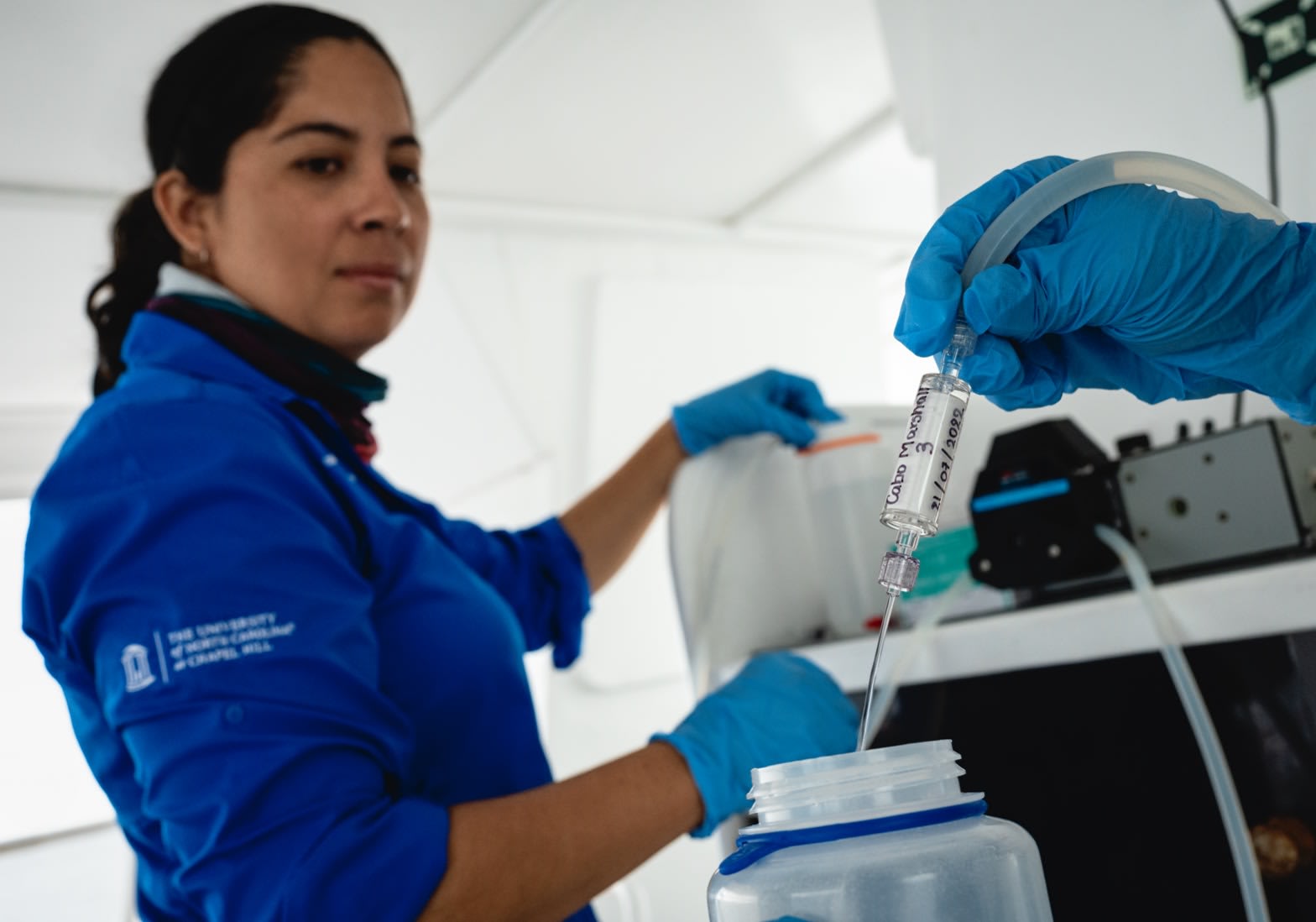
As well as monitoring what they could see, the team also went on the hunt for “dark diversity”, marine life that is absent from a study site. Diana Pazmiño, a researcher at the Galápagos Science Center at Universidad San Francisco de Quito, used environmental DNA, or eDNA, to capture signals of the rare and enigmatic life around the islands. “It’s based on the fact that all animals are leaving a trace of DNA behind in the environment,” she explains. Pazmiño found that many of the DNA sequences could not be matched to public databases. So, she is now creating a library of reference data to help future explorers successfully identify the species they detect. There is also the tantalizing possibility that some of the DNA she has found belongs to species completely new to science.
It would not be the first discovery for the team. Alongside Earle, Salome Buglass, a PhD student at the University of British Columbia, packed into a submersible and headed deep underwater to look for kelp. Kelp are typically found in cold water regions, but the presence of a new species in the Galápagos’ tropical waters was uncovered a few years ago by Buglass and Earle. Using remotely operated vehicles they also spent time searching a range of suspected deep-water kelp locations and ended up encountering lush forests. Next, Buglass will analyse samples to learn more about the mysterious Galápagos kelp.

One ocean without borders
The expedition team also surveyed turtle habitats, mapped the foraging grounds of penguin colonies, and measured levels of microplastics. Such a wide range of fieldwork will help conservationists to, as Earle puts it, “think like an ocean” – recognizing the connectivity of ecosystems and that, for marine life, there are no boundaries. To this end, in 2021, Ecuador, Panama, Colombia and Costa Rica announced the creation of the Eastern Tropical Pacific Marine Corridor initiative, joining and increasing protected waters − to create a fishing-free “swimway” in a critical migratory route for sharks, turtles, rays and whales. While this is an important step forward, the work of Earle and her expedition team shows that there is a need to further widen and increase the number of swimways.
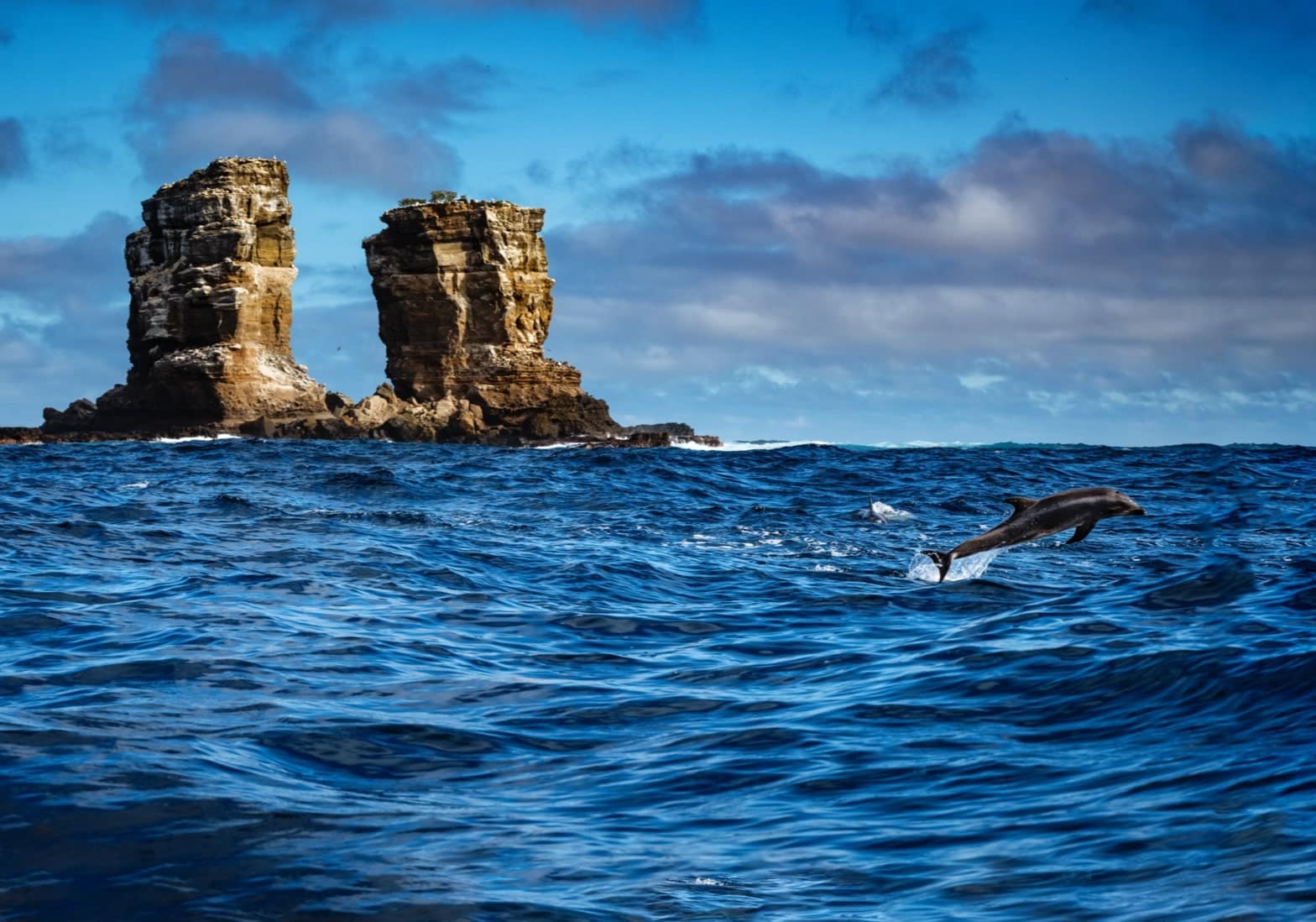
The role of connectivity does not end at the water’s-edge either. The team has been working with residents and young people to inspire love and appreciation for their home. “Every time I take a kid to do snorkelling somewhere in Galápagos,” explains Pazmiño, “they get amazed by the sharks and turtles and dolphins and all they want to do is protect them. That gives me so much hope.” Passing on a thriving ecosystem, and the knowledge of how to keep it that way, is something Yépez wants to be able to do too, including for the next generations of local fishers heading out to catch grouper. “The Galápagos is a beautiful habitat for the community and the animals to live together,” he says, “and this is the way.”

Launched in 2009, Mission Blue’s aim is to create a global network of Hope Spots, which are ecologically important areas of the oceans considered vital to the preservation of species, or places where communities rely on a healthy marine environment to survive. So far, Mission Blue has created more than 160 Hope Spots around the world. Key to the programme is the empowerment of local people to make change.