Shortcuts

Master photographer on a mission to help us see the sea
National Geographic Society
Published in
Without photography, the world beneath the ocean’s surface would remain an unseen mystery for most of us.
by Becky Harlan

Pioneering underwater photographer David Doubilet—whose first photo was published in National Geographic in 1972—has dedicated his life to capturing the action, drama, and poetry of our oceans and bringing those images back to the surface for those of us who might never see those sights with our own eyes.
I asked Doubilet what got him started and what keeps him swimming, looking, and sharing stories from our quickly changing seas. An edited version of our exchange is published below, along with some of his most memorable images from his career.
What first drew you to underwater photography?
When I was about ten I obsessed over a picture in National Geographic magazine showing Luis Marden standing with Capt. Jacques-Yves Cousteau on the deck of the Calypso. Cousteau was a legend, an international star. Luis Marden was a National Geographic underwater photographer and my hero—I wanted to be like Luis Marden and bring back pictures from a secret world.
What was the first photograph you took underwater?
My first pictures were pathetic, dark failures of fish butts and human feet. I later graduated to using a pre-World War II Leica in a real aluminum housing and spent every waking moment I could shooting underwater in New Jersey or the Bahamas. I think I took my first successful pictures of divers decompressing in Small Hope Bay when I was 13. I won a very cool medal for third place that I still have for sentimental reasons.
What was the field like at that time?
My colleagues and I stood on the broad shoulders of Hans Hass and Jacques-Yves Cousteau. There were a handful of us out there making underwater images using primitive equipment. The field was wide open because the field really did not exist. We talked about equipment and how to improve it. It was and still is a challenge to make great imagery in a world where you can see a hundred feet on a good day. We were working in an ocean filled with the bizarre and wonderful, limited by light, time, and technology. It was frustrating because we could “see” pictures that we could not make.
In your career so far, what’s the most memorable moment you’ve experienced in the sea?
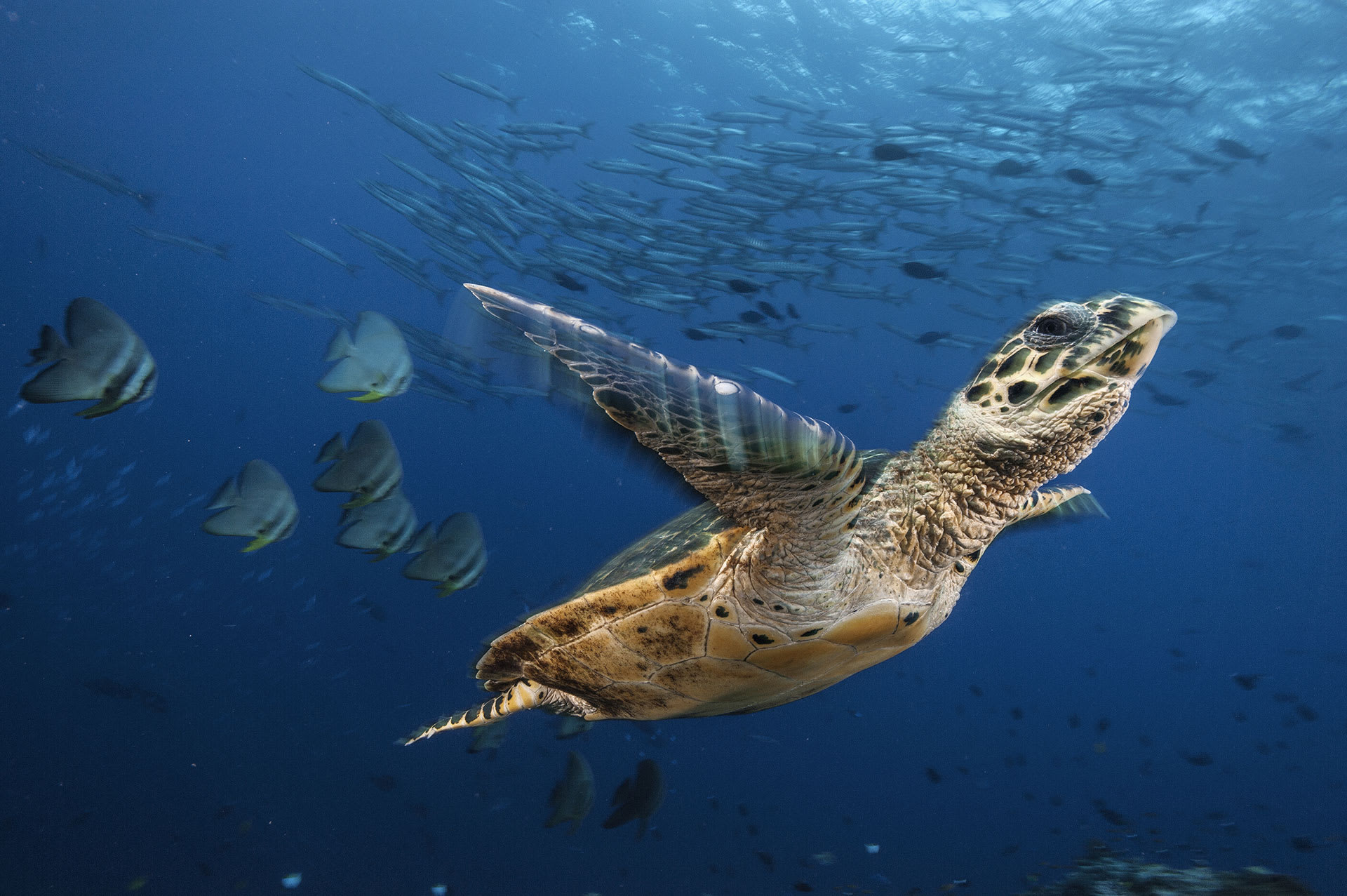
I have had many magical and surreal moments in the sea. Diving with sea lions, descending down icebergs—but one connection lingers with joy and worry. We rolled off a boat near Kimbe Bay, Papua New Guinea, to be greeted by a small hawksbill sea turtle. She swam with me the entire dive, looking over my shoulder, resting on coral, snacking on sponges, and watching me photograph things. I returned to the boat to swap tanks several times while she waited beneath the boat. On the last dive of the day she must have been tired because she settled onto my tank and rested as I swam for both of us. As we left that reef I was overwhelmed by the experience but consumed with anxiety that she would mistakenly greet a fishing boat and be taken to a local market, turned over to bake in the hot sun waiting for a buyer.
Is there a counterpart to that? A worst moment?
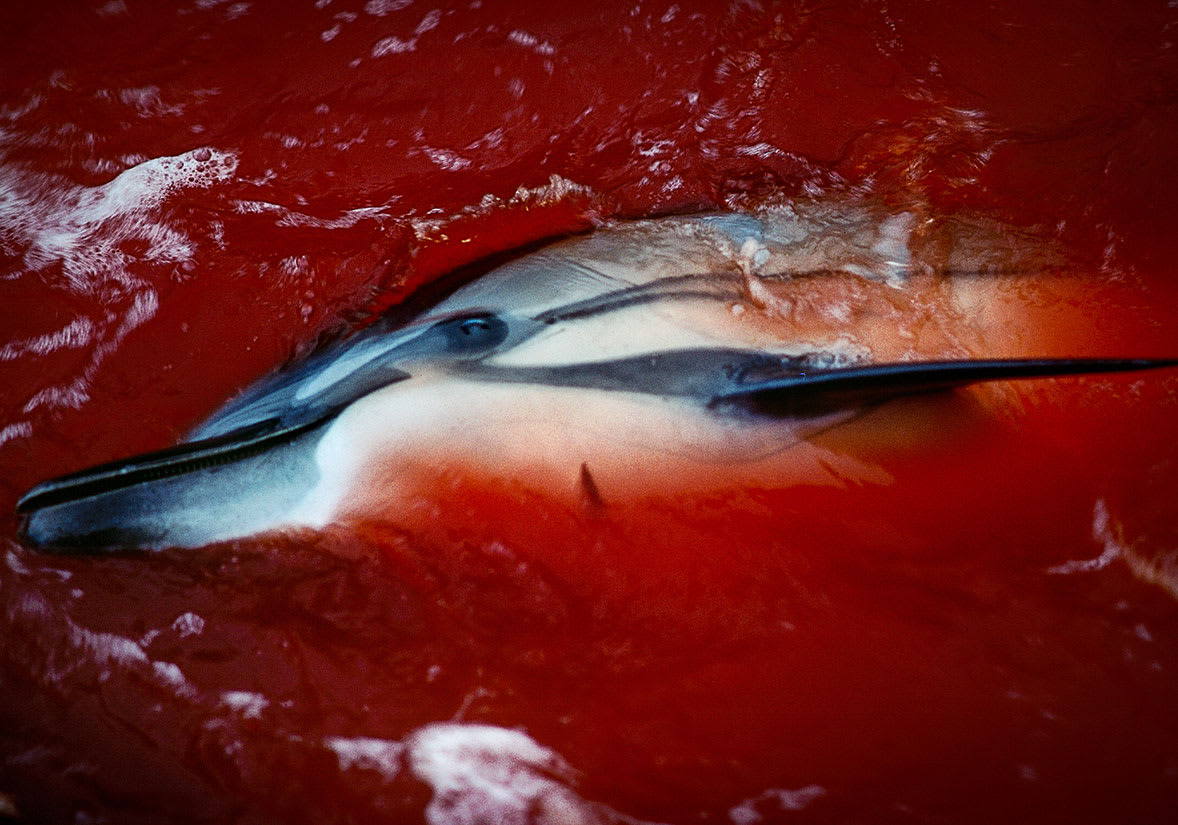
I happened to be in Futo, Japan, on assignment to photograph the Izu Peninsula. One morning I went down to get on our boat and the harbor was closed. I asked why and they said, “The dolphins are here.” I thought I would walk down and see a pod of dolphins in the cove but I found a blood red sea filled with living, dead and dying dolphins. I grabbed my cameras and started shooting from the concrete docks. The dolphins had been herded into the cove and drawn together with nets. The fisherman would grab a dolphin by its rostrum and slit its carotid artery and let it swim away to bleed to death. The screams and cries of the dolphins rose up through the concrete, through the soles of my feet into my soul.
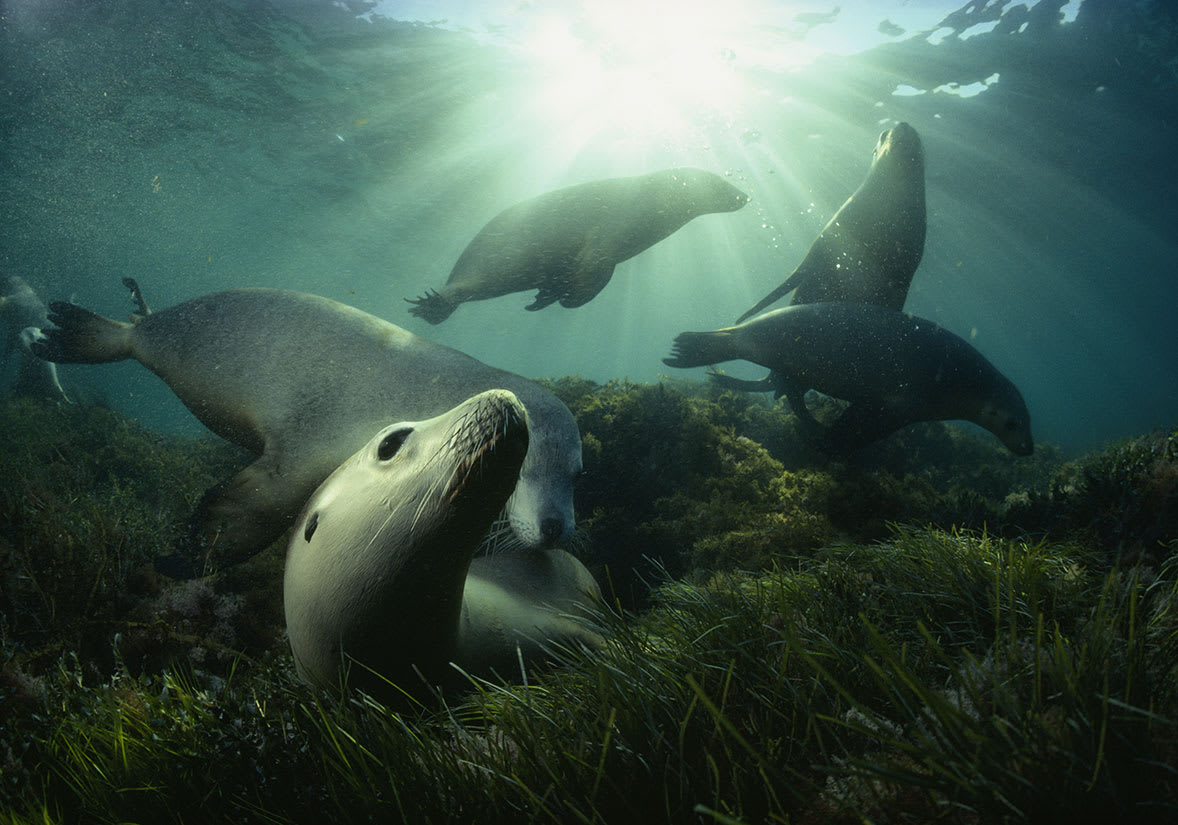
- A group of Australian sea lions relaxes and plays in a soft bed of sea grass surrounding Hopkins Island, South Australia. They are like curious puppies underwater, pulling on straps and tugging at fins. At one point they all disappeared in a single moment. They knew something we did not—a great white shark was patrolling the island looking for a meal. — David Doubilet
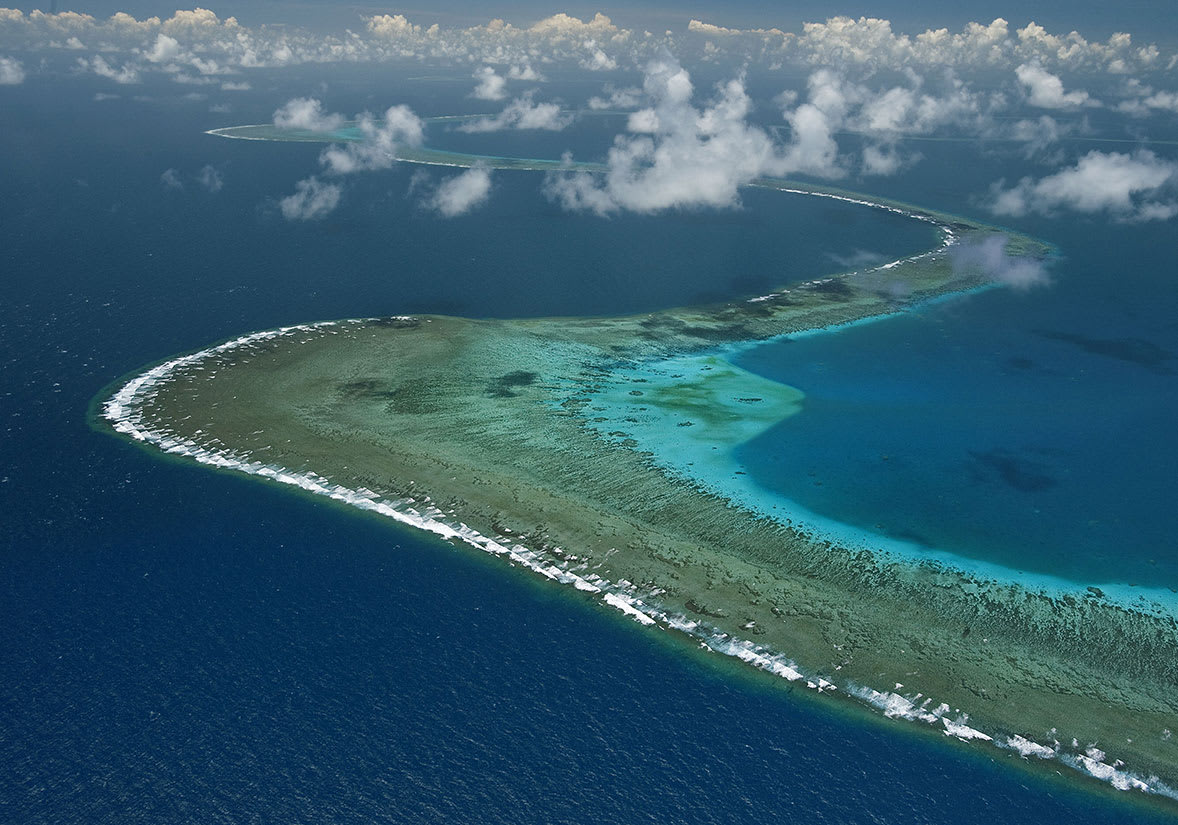
- One of the best ways to understand a reef is look down at it from the air. Great Detached Reef on the Northern Great Barrier Reef faces the ocean forces of the Coral Sea. We journeyed to this remote and untouched northern reef system in 2010 to find robust corals and a healthy population of sharks. Today over 90 percent of the Great Barrier Reef has experienced coral bleaching related to El Niño. — David Doubilet
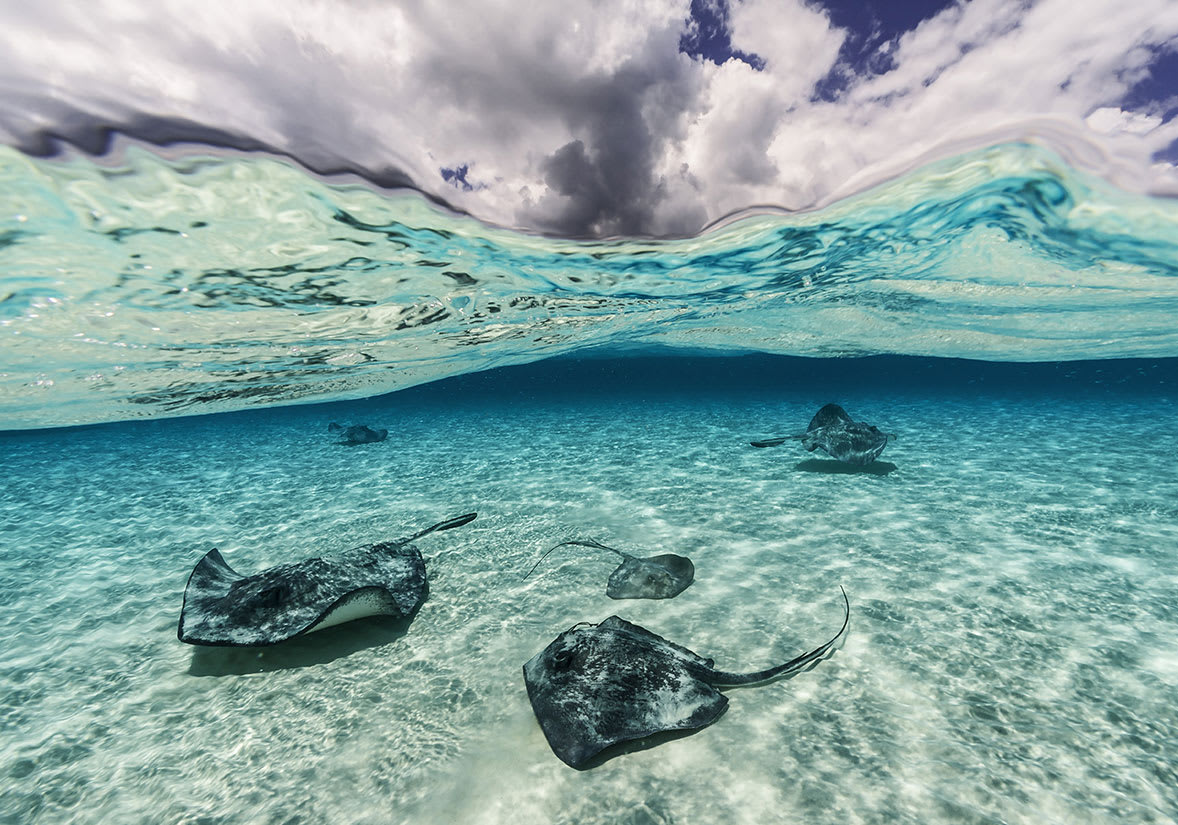
- Southern stingrays glide across the perfect ocean stage in North Sound, Grand Cayman Island. I photographed on assignment here when there were seven stingrays, each with a name. After the story thousands of people arrived to swim, snorkel and dive with the gentle rays. Stingray City and Sandbar have become one of the world’s most popular ocean destinations. There are now a few hundred stingrays that act as ocean ambassadors, greeting a nearly a thousand visitors a day. — David Doubilet
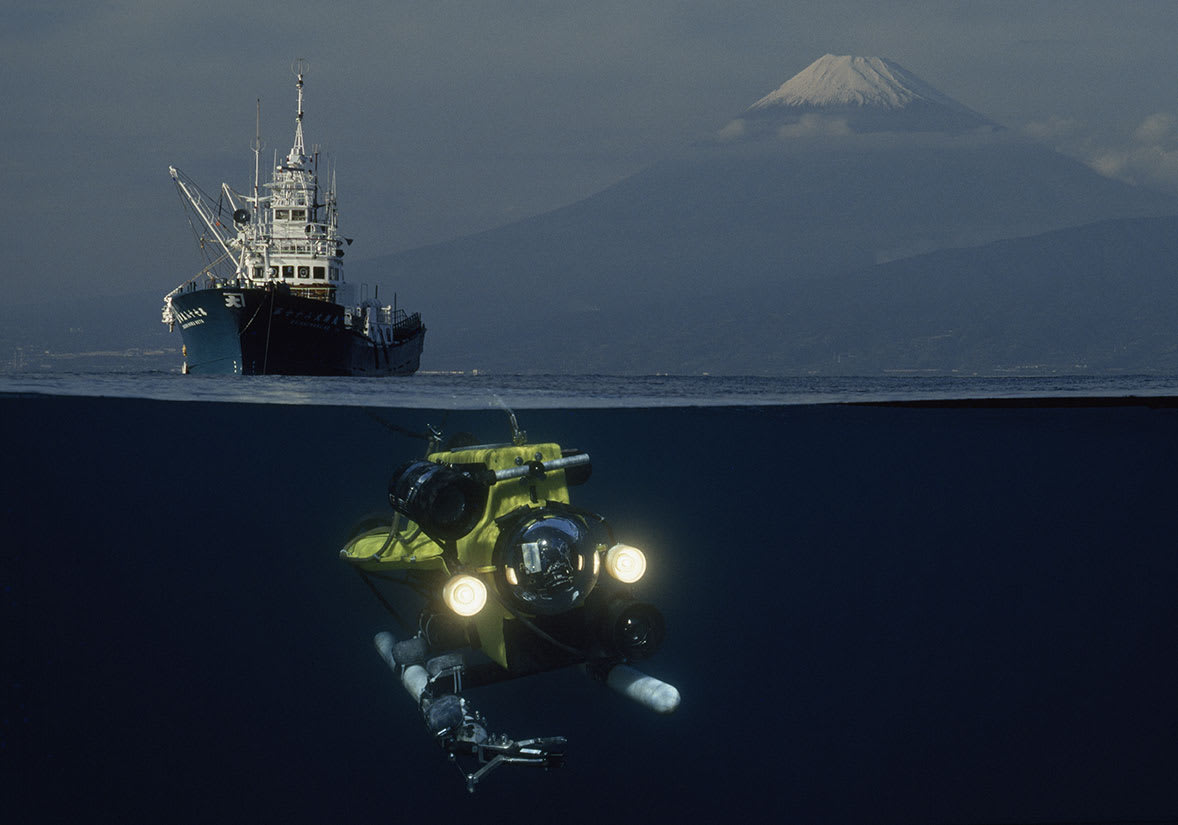
- A remote operated vehicle (ROV) descends into Suruga Bay, Japan, as Mount Fuji rises in the background. This image was a technical challenge that required using a traveling mat designed by my genius colleague Kenji Yamaguchi in NG photo engineering. The mat blocked the bottom of the lens so I could shoot Mount Fuji and then rolled the film back to block Mount Fuji so I could shoot the ROV. This very difficult technique married two images together on film in a single frame. — David Doubilet
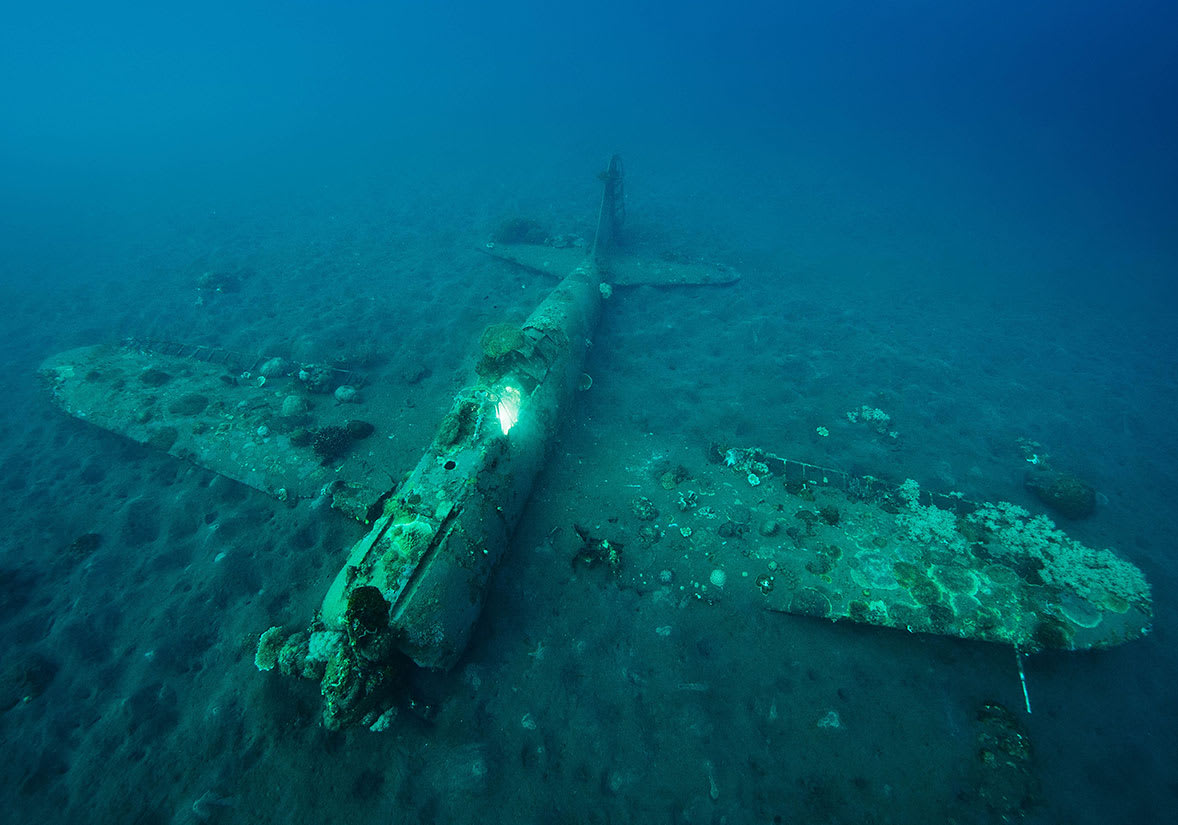
- A Japanese Zero sleeps on the soft volcanic sands of Kimbe Bay, Papua New Guinea. World War II rolled back and forth across the north coast of New Britain Island, leaving the wreckage of war behind in the jungles and the sea. — David Doubilet
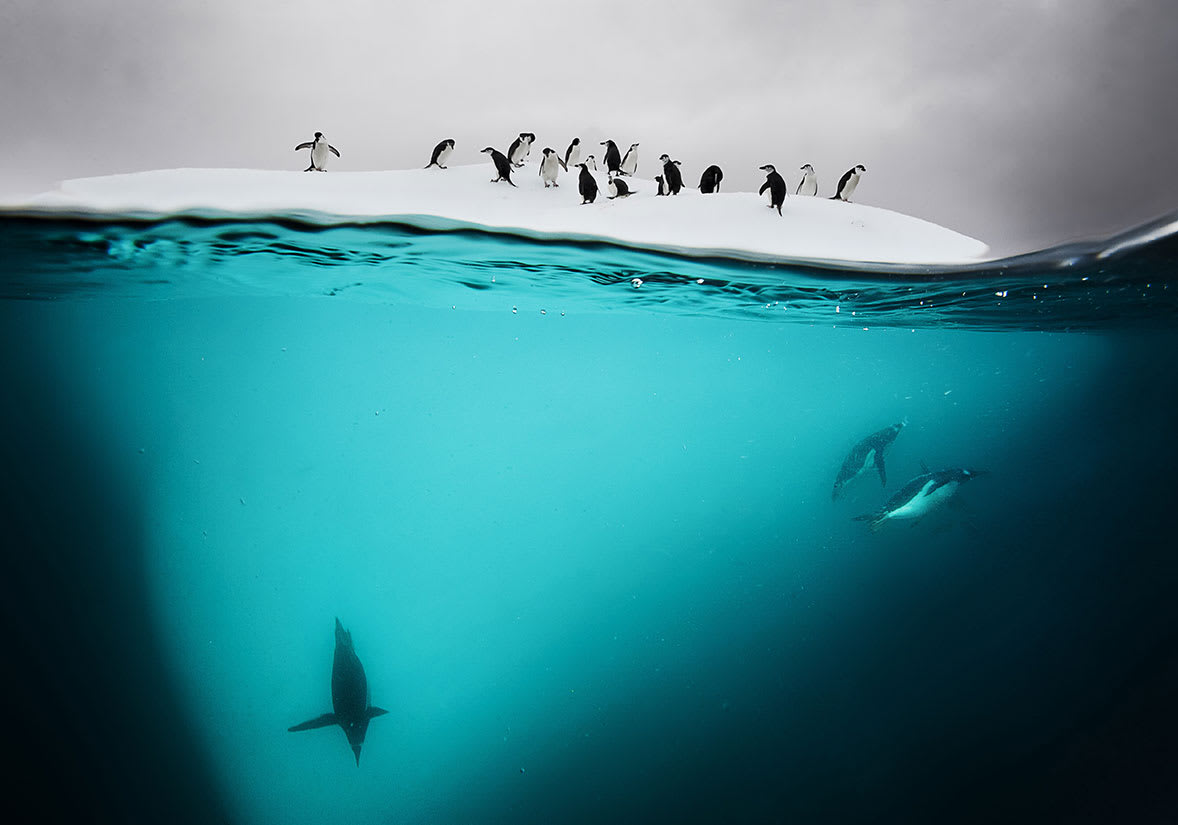
- Chinstrap and gentoo penguins squabble and rest on a small island of ice called a bergy bit near Dank Island, Antarctica. The penguins were concerned I was a leopard seal circling their island waiting to eat them. I watched a chinstrap knock a gentoo into the water. When the penguin swam past me and climbed back onto the ice all of the penguins began to leap, swim, and circle the island in front of me. — David Doubilet
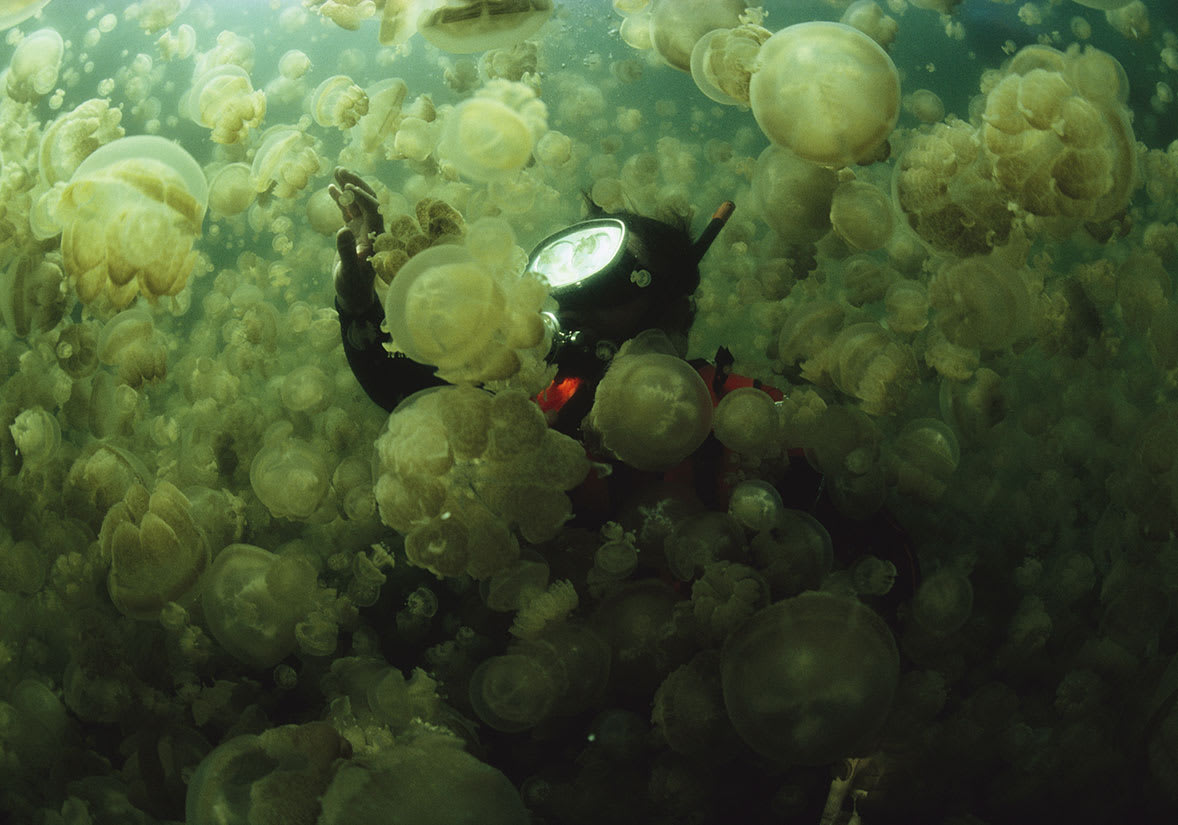
- Dr. William Hamner rises into a layer of Mastigias jellyfish in Jellyfish Lake, a marine lake in Palau. The lake has an underground connection to the sea and supports a large population of jellyfish that have lost their ability to sting. — David Doubilet
Those are both such intense experiences on opposite ends of the spectrum. What other sorts of stories pique your interest?
When I began shooting underwater everything was mystery – the sea was an unknown frontier. Forget a fear of sharks; people were afraid of getting their foot caught in giant clams and drowning. I started my career photographing coral reefs and their complex layers of life. I became interested in temperate ecosystems of Tasmania, New Zealand, Japan, California and British Columbia. A story on Pacific corals would lead to the discovery of an airplane or shipwreck and WWII story. I decided to take on stories that were less popular subjects but needed to be told, like the extinction of freshwater eels, goliath groupers, and the Sargasso Sea.
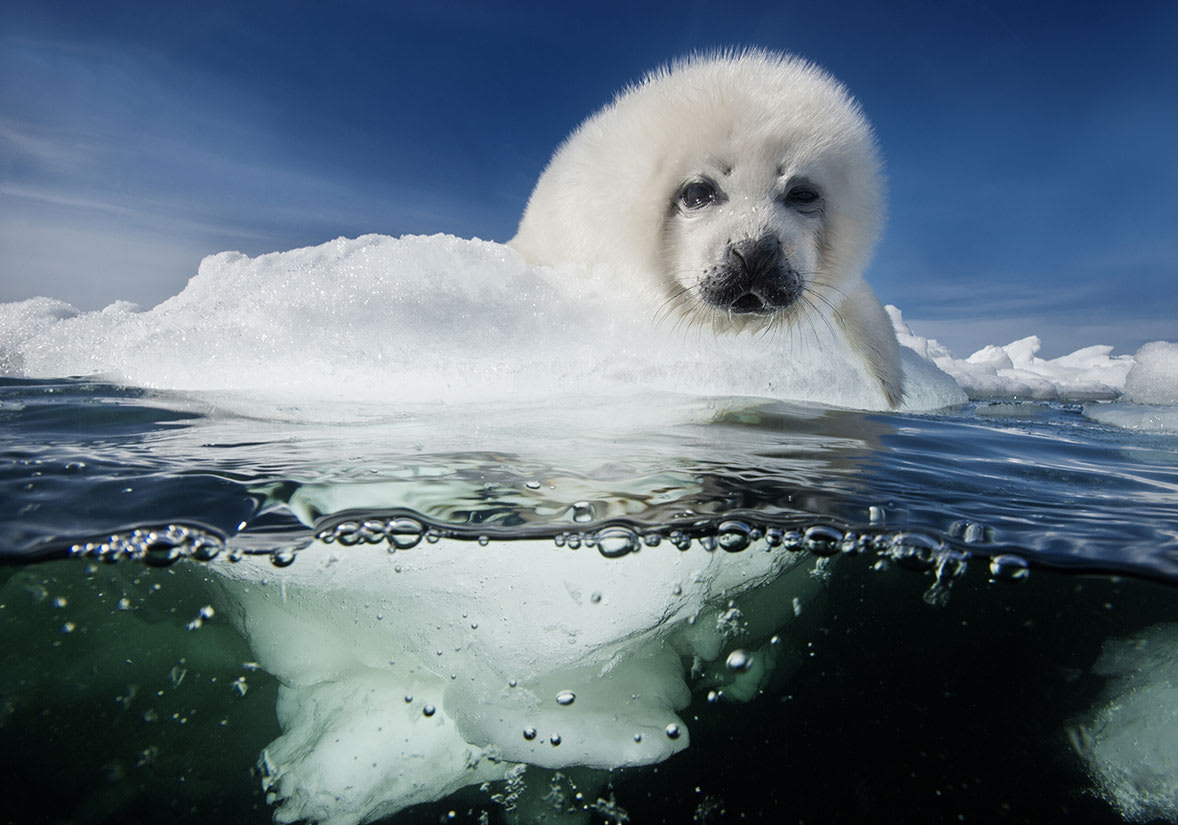
Now I am interested in documenting a changing sea, and I am swimming from equator to pole to do it. Icebergs mesmerize me because they are a perfect metaphor for the sea: a small fraction visible to the naked eye. Greenland’s iceberg garden at Red Island in Scoresbysund Fjord is a place where beautiful iceberg sculptures tell a very ugly truth about glacier retreat. I am interested in putting a face on climate change that no one can ignore. We found that face on a National Geographic assignment in the Gulf of St. Lawrence. It is the face of a harp seal pup called a white coat, born on the sea ice. Elevated temperatures have created unstable ice leading to nearly 100% mortality of the pups in the gulf.
You’re doing so much more than just getting the best shot of any old thing. Your images are crafted to tell important stories. How has storytelling pushed your photography?
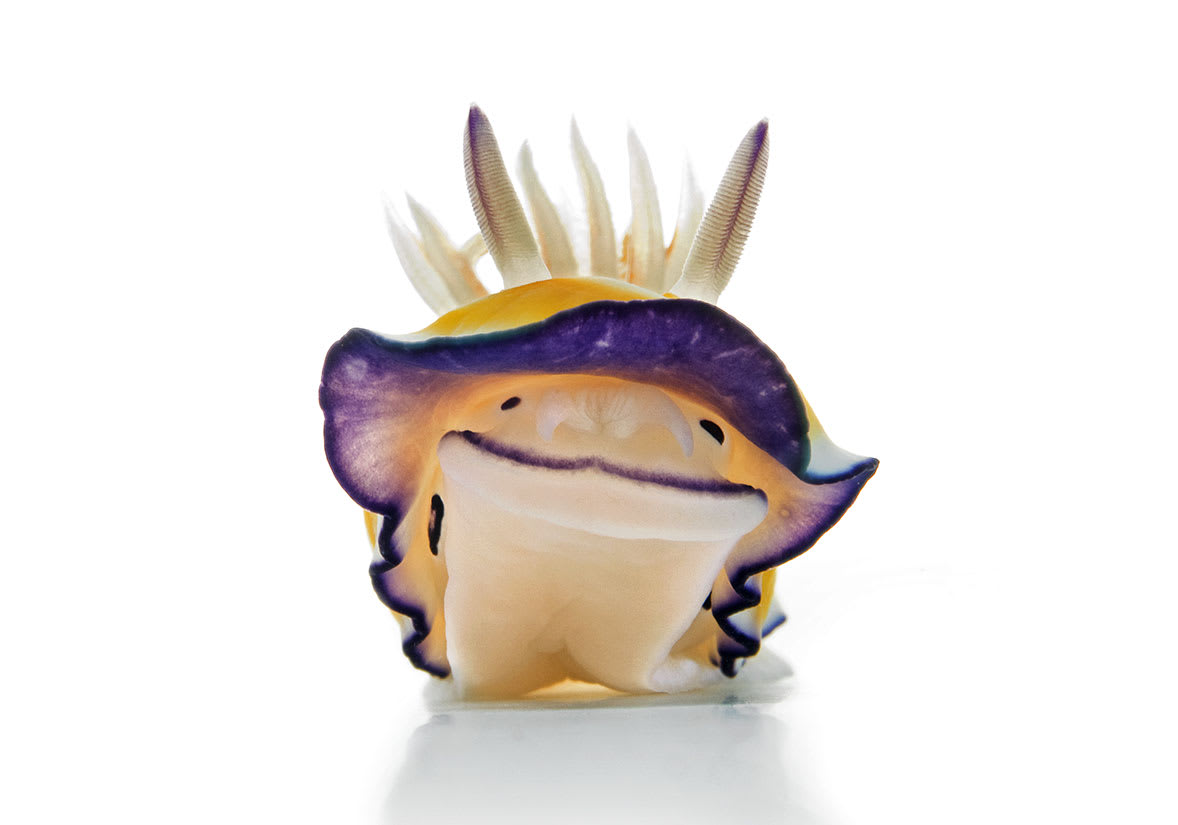
I approach a story hoping to develop a different way of looking at a subject. For example, nudibranchs are small, delicate toxic sea slugs that have developed wild patterns and brilliant colors that advertise, “eat me and you will die.” They blend into the background in the sea, but I wanted to share these creatures with the world in a way they could meet them face-to-face and really “see” them. I built a miniature Plexiglas studio mounted on a tripod that we swam to the nudibranchs at 10, 50, 100 feet—wherever they were. A nudibranchs specialist carefully moved the nudibranch to the studio where I photographed like a fashion model and returned it to its exact spot. Ironically, the images went viral and someone started a website called “pimp my nudibranch.”
What compels you to spend your entire life swimming around the world from equator to pole to capture images?
I keep swimming and taking pictures because images have the power to educate, celebrate, and honor. Pictures are a universal language that can win hearts, change minds and ultimately behavior. The oceans are in real trouble and as the oceans go so do we.
How can we help?
Every day is World Ocean Day. Small changes can make a big difference. Eat sustainable seafood. Recycle and minimize plastic in your world. Become a citizen scientist. And meet the ocean—set a date with the sea.
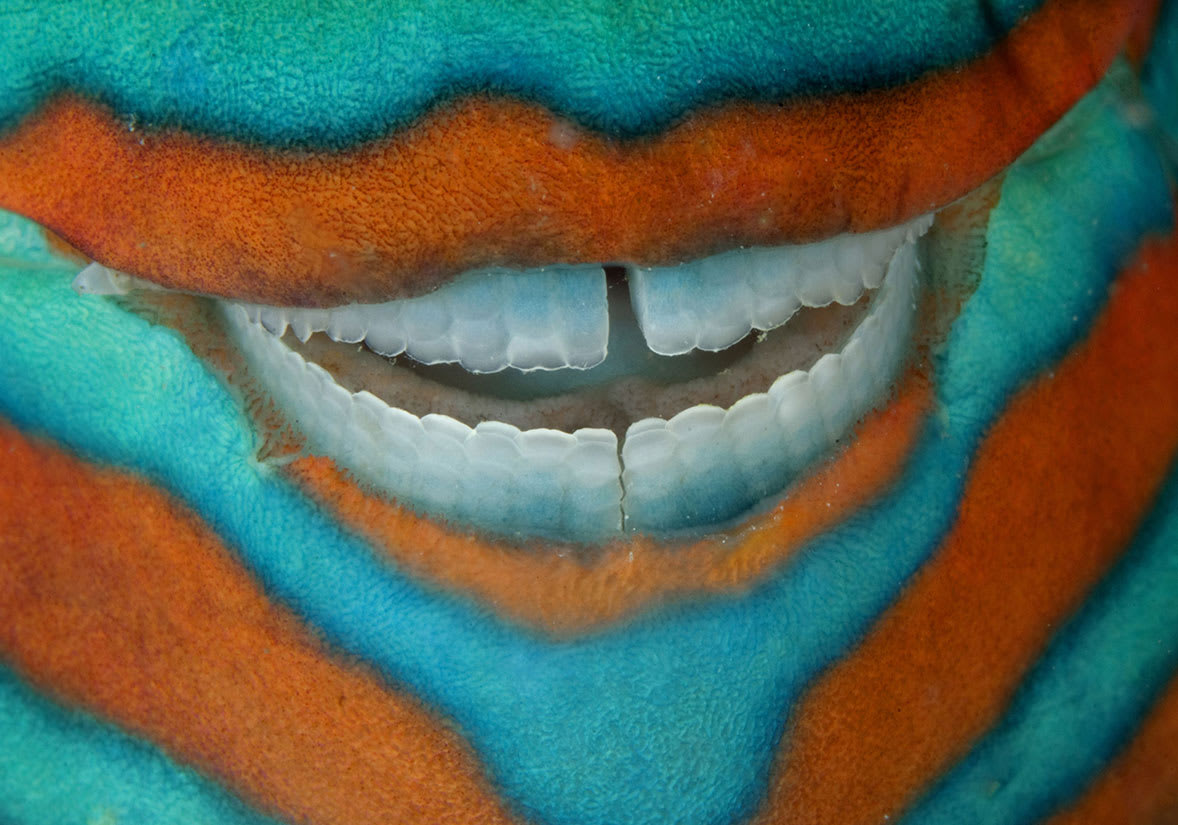
- I was photographing the Great Barrier Reef at Heron Island when I swam past a sleeping bridled parrotfish that appeared to be grinning with gleaming white teeth. They use their teeth to bite and grind chunks of coral, which produces a fine white sand. I thought of my dentist as I photographed its winning smile. — David Doubilet
- A harp seal pup called a whitecoat patiently waits for its mother to return in the Gulf of St. Lawrence, Canada. Pups are born on the ice in late February and nursed for 12 to 15 days until their mother abandons them to mate and migrate. The pup, fattened with enriched milk, will wait for its mother until hunger or weak ice forces it into the sea to learn how to swim and eat. Natural mortality is high in normal conditions, and we have witnessed the loss of over 90 percent of pups when storms have demolished weak ice in warmer than normal temperatures. —David Doubilet
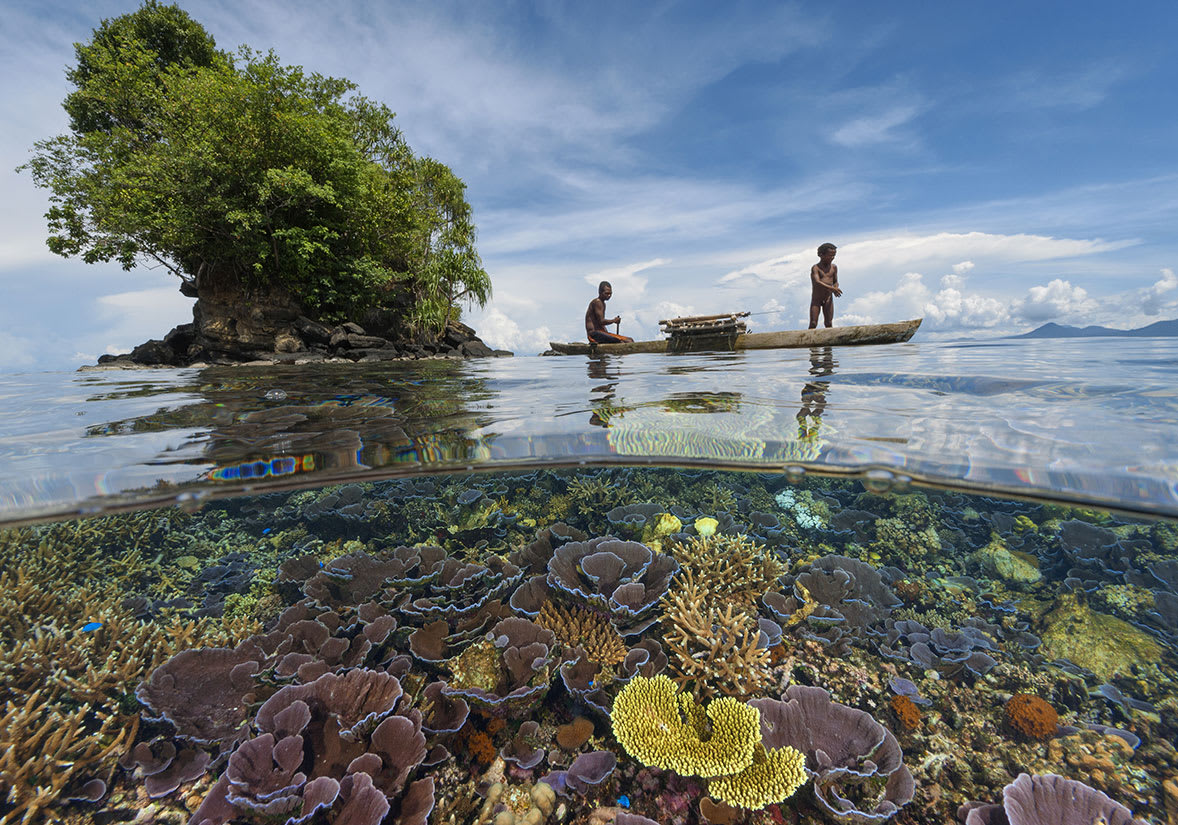
- A father and son fisherman glide across a shallow garden of coral surrounding an island near the tip of a peninsula in Kimbe Bay, Papua New Guinea. On every assignment I constantly look for the perfect spot to make a half-and-half image that relates the surface to the hidden world below. This image captures the essence of Kimbe in a single frame: healthy coral and small islands surrounded by active volcanoes plunging to a sea that supports subsistence fishing. — David Doubilet
- A Chromodoris nudibranch appears to smile at the camera from its mini underwater studio, which I created to take into the sea to photograph these brilliantly colored toxic sea slug fashion models. The brilliant colors warn predators, “Eat me and you will die.” The small studio was mounted on a tripod and taken to where the nudibranchs lived. — David Doubilet
- A dolphin surrenders to death in a sea of blood during the annual dolphin harvest in Futo, Japan. I was on assignment in Futo for another story when the fisherman herded a pod of dolphins into a small cove. They wanted me to leave, but I stayed and photographed as the fisherman grabbed each dolphin by its rostrum, slit their carotid artery and then let them go to bleed to death. The cries of the dolphins vibrated through the concrete dock and rose up through my feet. It was the one of the worst moments in the sea in my career. — David Doubilet
National Geographic produced this content as part of our partnership with Rolex, formed to promote exploration and conservation. The organizations have joined forces in efforts that support explorers who are nurturing big ideas and finding real solutions to protect Earth’s wonders.