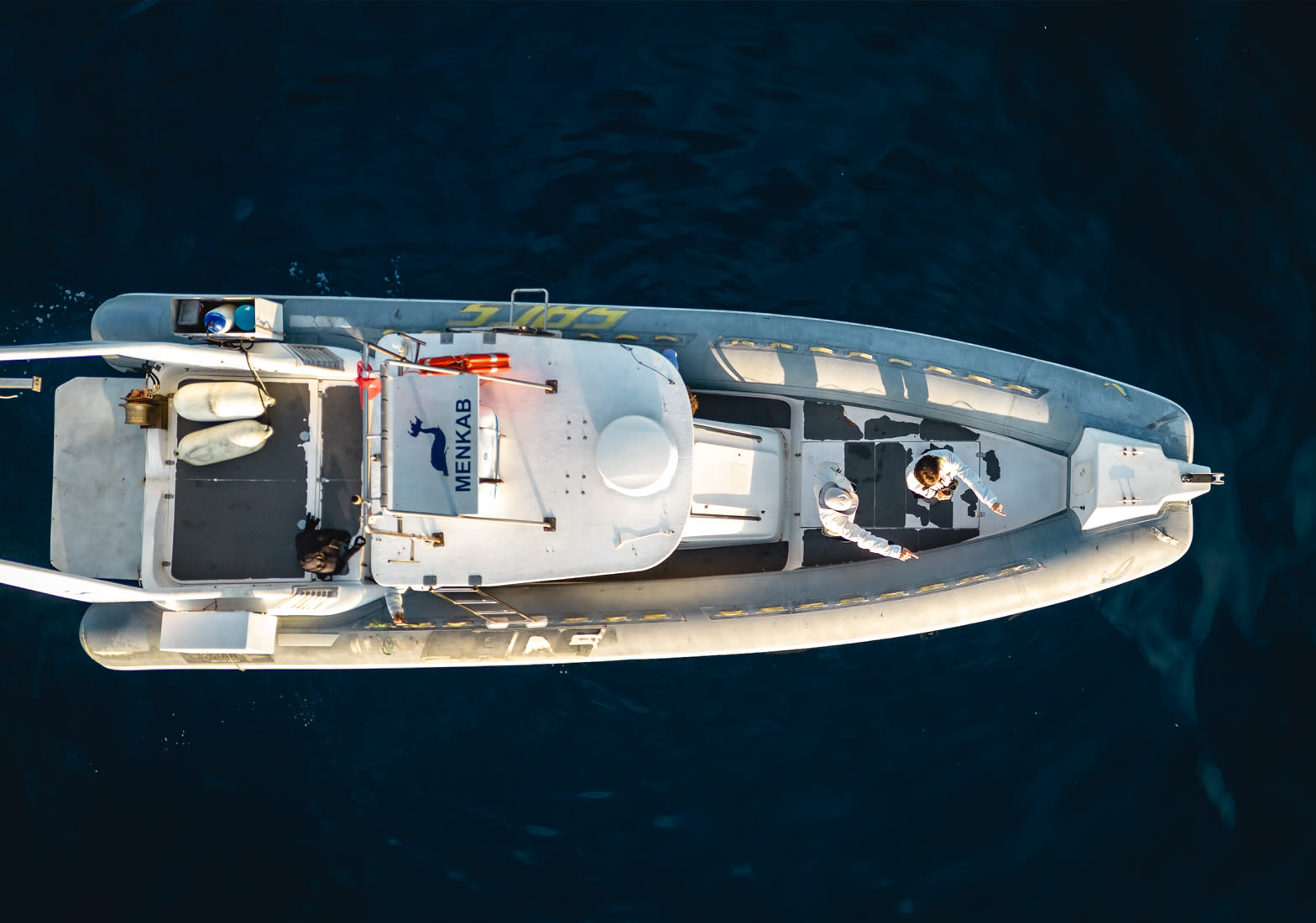
The port of Savona on the west coast of northern Italy is heavily built-up. Formerly a major centre for the iron industry, today it heaves with tourists thanks to its spectacular churches and fortresses. But if you head a little way out to sea, you can see sperm whales, one of the largest animals alive.
In the oceans, sperm whales routinely can grow to 16 metres in length, whereas those in the Mediterranean Sea do not exceed 13 m. Their size and power mean they are among the most spectacular animals to see in the wild, but can be elusive, diving to depths of more than 1 kilometre in search of prey such as squid.
Despite the intensive human presence in the region, many sperm whales choose to spend their time in the Ligurian Sea, an arm of the Mediterranean indenting the north-western coast of Italy. “Cetaceans are really very intelligent animals with great adaptive abilities,” says Giulia Calogero, president of ocean conservation organization Menkab. That adaptability enables them to live alongside humankind.