Shortcuts

A profound collaboration
Under The Pole
Published in
With its expedition in Guadeloupe’s mesophotic zone, Under The Pole successfully completed the first chapter of its DEEPLIFE series, supported by the Rolex Perpetual Planet Initiative, through which the team of expert divers studied marine animal forests in Arctic, temperate and tropical waters.

The mesophotic zone
The mesophotic zone is a world between worlds. Situated between 30 and 150 metres under the sea’s surface, this “middle light” zone is a murky and mysterious treasure trove of life that is beginning to yield its secrets to the few intrepid explorers and scientists capable of diving to its depths.
Among their number are Luiz Rocha and the Under The Pole team, both part of the Rolex Perpetual Planet Initiative. They are focused on exploring and understanding the unique habitats of the mesophotic zone for conservation purposes around the world.

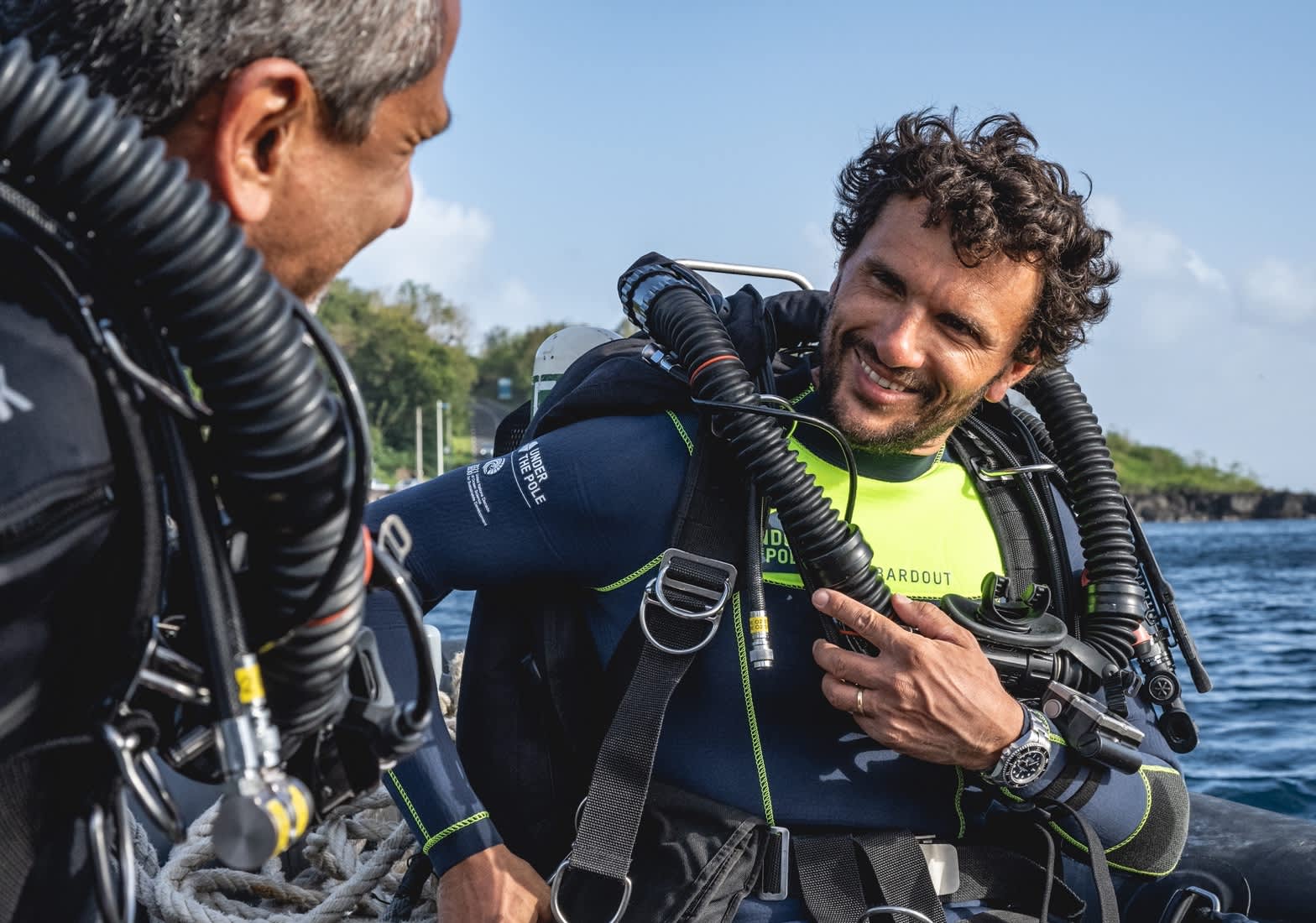
Under The Pole is a group of expert technical divers, founded and led by Ghislain Bardout and Emmanuelle Périé-Bardout, who undertake deep ocean exploration in the service of science. In collaboration with an international scientific consortium led by Laetitia Hédouin and Lorenzo Bramanti (of the French National Centre for Scientific Research), Under The Pole’s DEEPLIFE programme has been officially endorsed as part of the United Nations’ Decade of Ocean Science for Sustainable Development (2021-2030). Thanks to rebreather technology, which recycles a diver’s gas mixture supply to reach extraordinary depths, Under The Pole has been able to push the boundaries of marine exploration, including recording the first dive under the polar ice pack that reached over 100 metres deep.
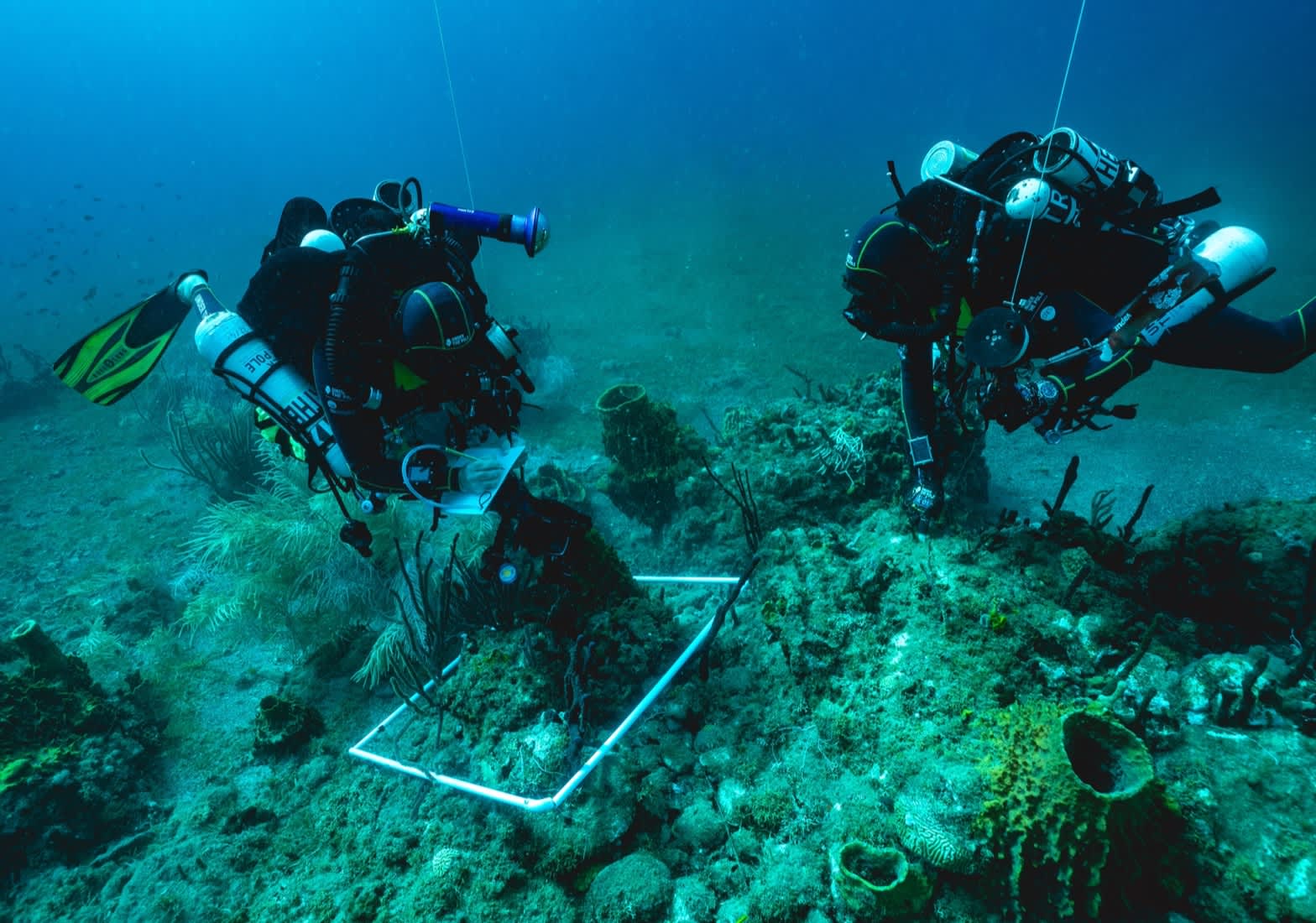
For the DEEPLIFE expedition in Guadeloupe, the Under The Pole team worked alongside Rocha, a Rolex Awards for Enterprise Laureate and one of the world’s foremost experts in ichthyology (the study of fish). By combining decades of experience studying the mesophotic zone, they were able to shed new light on marine animal forests in the region’s tropical waters.

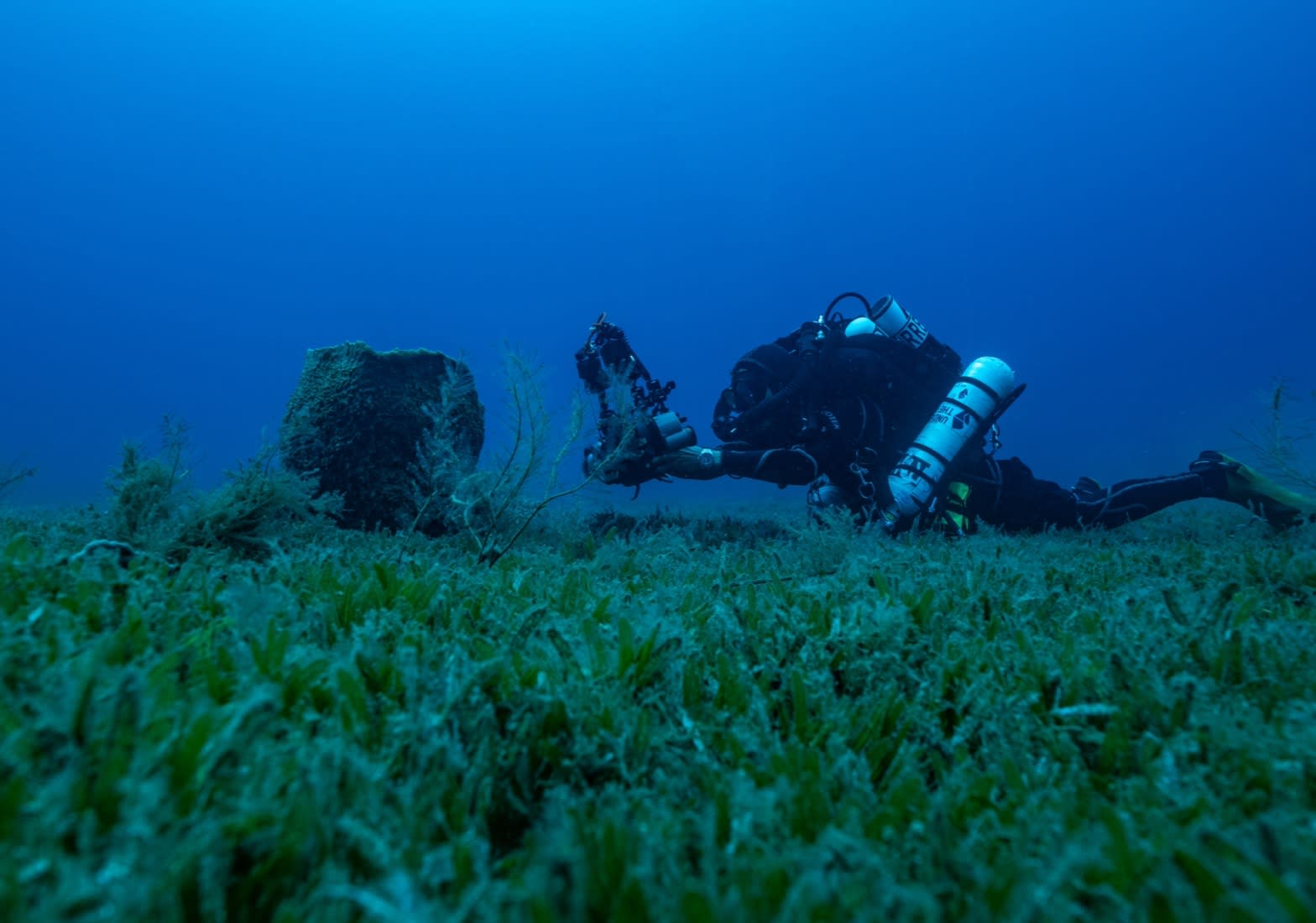
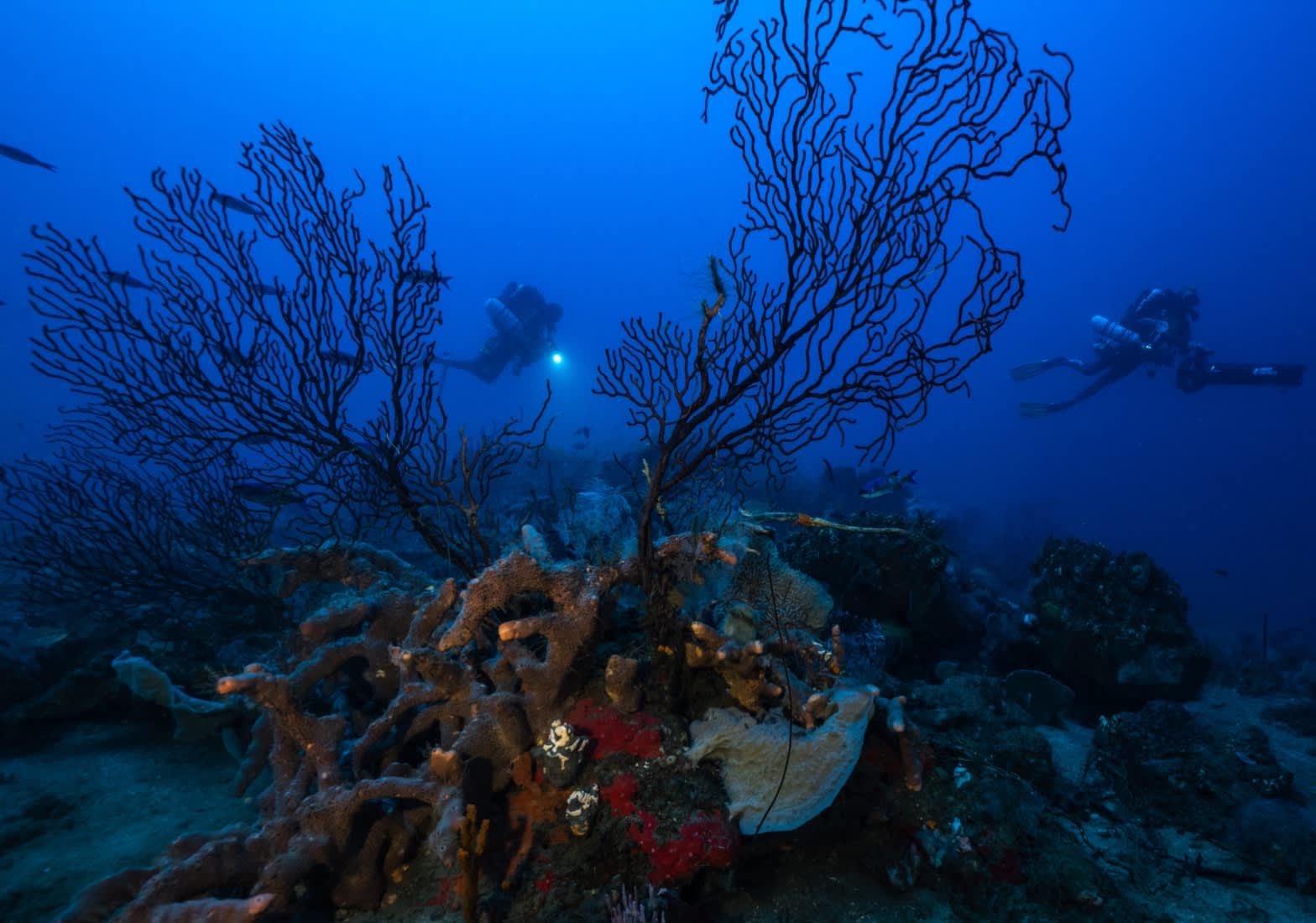
Marine animal forests are made up of animals such as corals, gorgonians, sponges and bivalves, which, when growing in great enough numbers, function similarly to a terrestrial forest, forming a canopy and providing a habitat for an astonishing array of species. Due to the difficulty of diving to the mesophotic zone, the marine animal forests growing at these depths are much less understood than their more famous counterpart in the shallows, coral reefs.
Rocha’s fascination with marine life began when, as a child growing up in Brazil, he had his own aquarium and would snorkel off the country’s rich coasts to explore life beneath the waves.
Today, that passion is taking him to ever-greater depths. It is in the mesophotic zone that the real advances in our understanding of marine life are to be made. Rocha estimates that 99 per cent of what we know about coral reefs comes from the shallowest, most accessible reefs.

A partnership in the depths
Diving to the deep reefs is fraught with complexity and risk, even with rebreather technology. It would be far easier to explore the depths by submarine but, for Rocha, that is not an option. “Submarines are very noisy, they have lots of lights. When you get close to a coral reef with a submarine, the fish hide. Studying fish in a reef with a submarine is like studying birds in a rainforest with a helicopter. It’s just not the right tool for the job.”
By marrying Rocha’s world-class credentials in ichthyology with Under The Pole’s unparalleled deep-sea diving record, the team could carry out unique research into the marine animal forests of Guadeloupe.

It is no coincidence that Rocha’s diving analogy references terrestrial forests. Many of the analytical measures adopted by the team were adapted from the study of rainforests. “We often use similar tools, and similar ecological theory. There’s very good scientific knowledge accumulated about terrestrial forests,” says Rocha, “It’s a way to avoid starting everything from scratch.”
We often use similar tools, and similar ecological theory. There’s very good scientific knowledge accumulated about terrestrial forests.
Working together in close quarters on board Under The Pole’s boat, The WHY, relationships were crucial. Fortunately, according to Périé-Bardout, the partnership with Rocha was a meeting of minds. “He is an incredible scientist. But in addition to that, we share something in our DNA. He is an adventurer and he is passionate about the desire to contribute to a better preservation of the oceans.”

A message of hope
For years it has been known that the world’s coral reefs are being depleted, but what Rocha and Under The Pole found is that where coral reefs are suffering, the marine animal forests of the deeper waters are thriving. They provide a similar habitat to the reefs and offer hope that these coastal ecosystems may be adapting rather than dying.
“Our job is to investigate how nature has been resilient in replacing its coral reefs with marine animal forests,” explains Périé-Bardout. “What else can be saved by these forests? What kind of biodiversity does it host? Sometimes nature comes back in a different form, but it comes back. Let’s study it, let’s understand it to be able to better preserve it tomorrow.”
Our job is to investigate how nature has been resilient in replacing its coral reefs with marine animal forests.
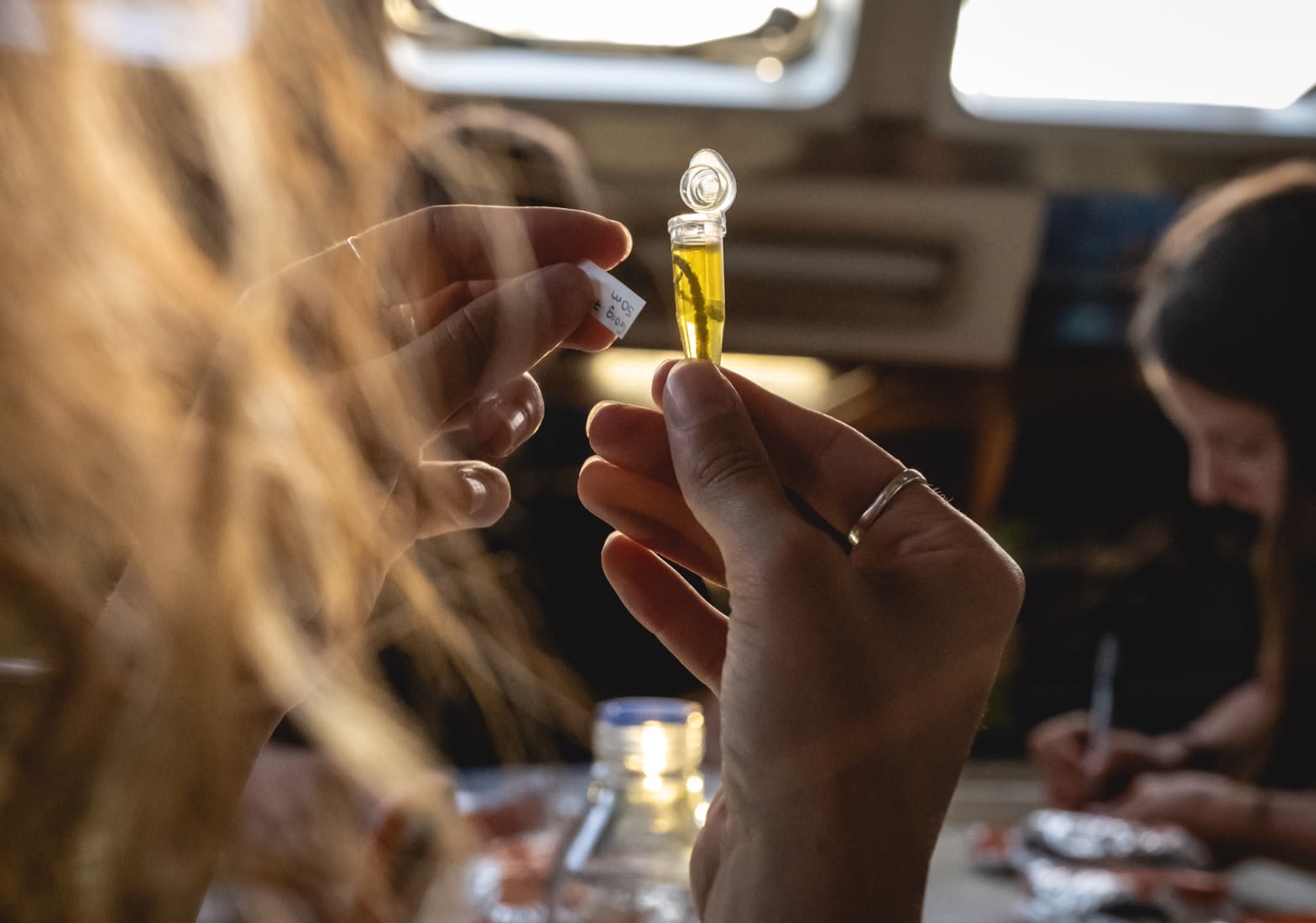
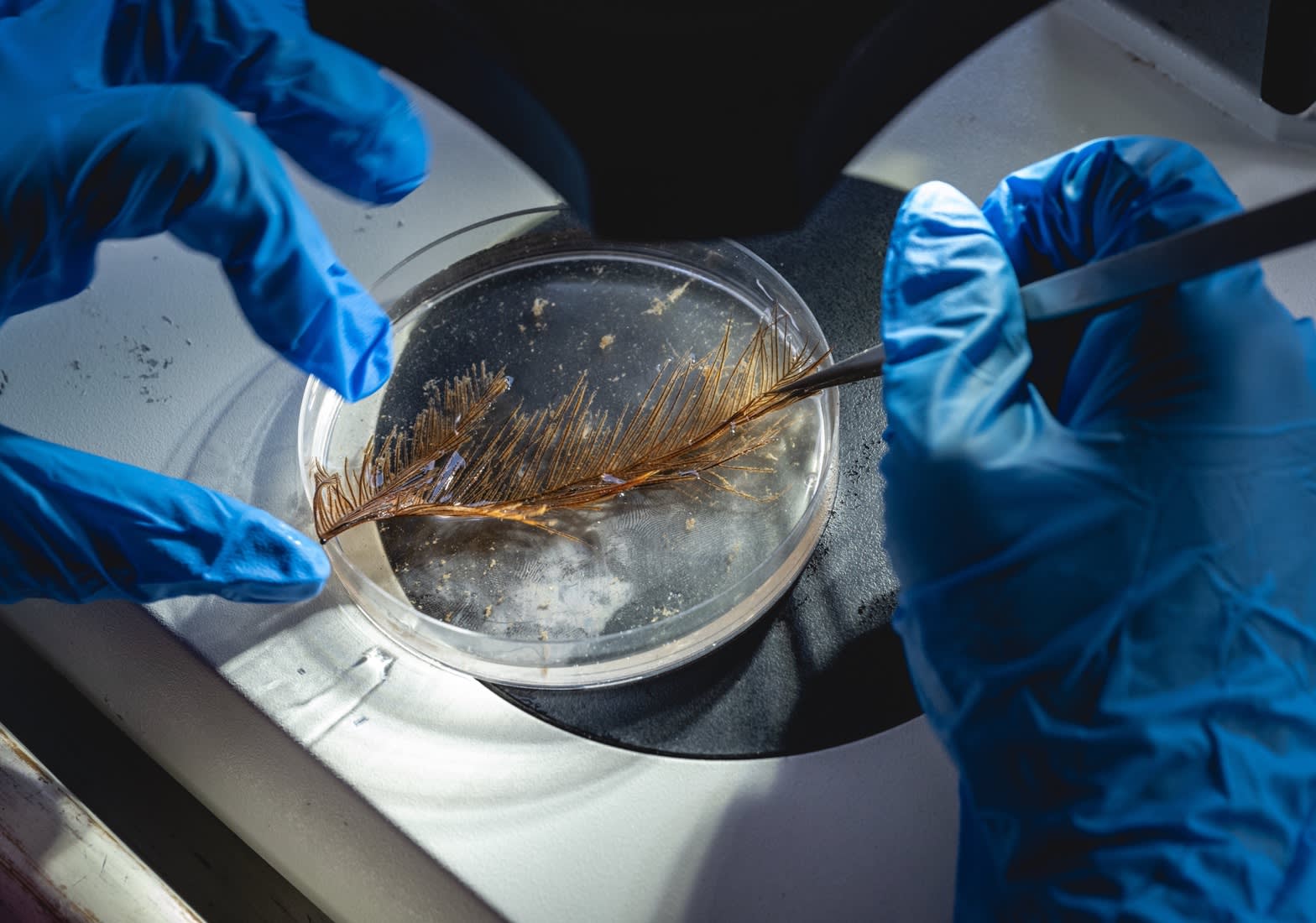
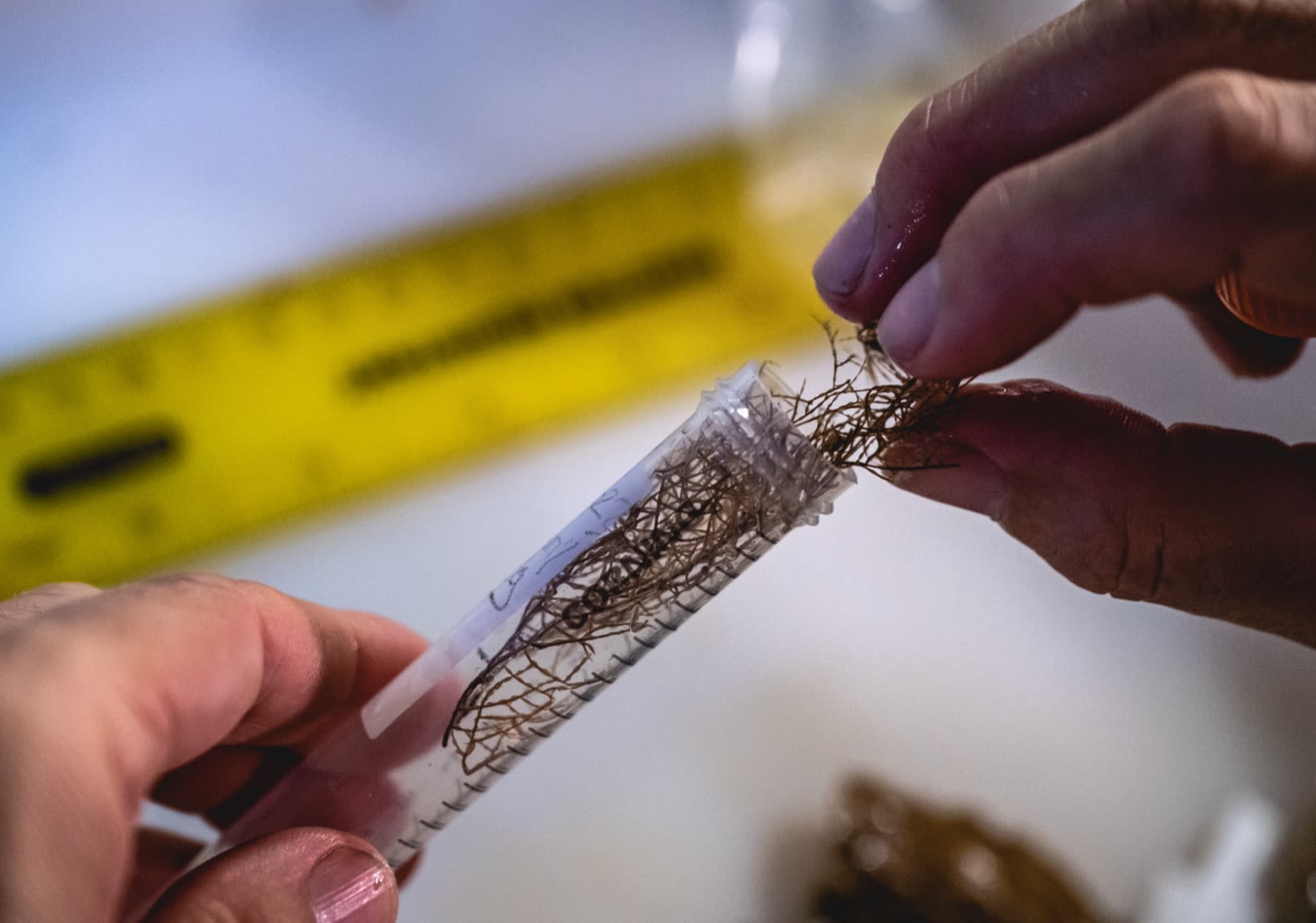
With support from the Rolex Perpetual Planet Initiative, the DEEPLIFE mission in Guadeloupe is bringing its message of conservation and hope to the world. The work is vital, and not without risk, but for Rocha and Under The Pole, it is also a passion, and an adventure.
According to Rocha, “Often, before a dive, we look at each other and ask: ‘Why do we do this?’ Then we dive, and we look at a reef that nobody has ever seen before, 120 metres below the surface of the sea, then we come back from the dive and say: ‘That’s it. That’s why we do it.’”