
The heart of it is education and engagement, and bringing our visitors close to the science, allowing them to put themselves in the scientists’ shoes.

Published in
The incredible discoveries made at CERN, the planet’s largest particle physics laboratory, have changed the world. The partnership between the Rolex Perpetual Planet Initiative and the CERN & Society Foundation is inspiring new generations with the spirit of scientific exploration.
On the border between Switzerland and France, the nature of our universe is being probed. CERN is a prestigious scientific organization, best known for the incredible discoveries made using the Large Hadron Collider, the world’s largest particle accelerator. With 60 kilometres of tunnels and more than 80 caverns, the facility’s underground infrastructure is extremely complex. Scientists and engineers across the site share a quest to understand the basic constituents of matter and the laws that govern it. This journey of exploration is the most fundamental research.

Stepping into the unknown requires creativity and innovation. Over the decades, CERN’s scientists have not only advanced knowledge but developed technologies that have changed society, from the birth of the World Wide Web to touchscreens and advances in medicine. The key principles of exploration, underpinned by a commitment to precision and excellence, are at the core of Rolex and CERN’s long-standing relationship.
The heart of it is education and engagement, and bringing our visitors close to the science, allowing them to put themselves in the scientists’ shoes.
Initially brought together almost 70 years ago by a shared interest in innovation and technology development, today Rolex is the Title Partner of the CERN & Society Foundation. As part of this privileged relationship, the brand supports educational activities led by the foundation such as: the Beamline for Schools competition; scholarships and technology transfer programmes involving young scientists from around the world; and Sparks, an outreach project that enables collaborations across disciplines. With this support, the charitable body fulfils one of CERN’s founding missions: to make a positive impact by sharing its discoveries with the world. “The heart of it is education and engagement, and bringing our visitors close to the science, allowing them to put themselves in the scientists’ shoes,” says Charlotte Lindberg Warakaulle, CERN’s director for international relations.

Essential to the CERN & Society Foundation’s mission to unlock science for a wider global audience is the Science Gateway centre. Rolex supported the construction of the centre, where particle beams and detectors are swapped for microphones and demonstrations as CERN’s scientists and engineers take the thousands of daily visitors through multimedia exhibits, hands-on experiments and interactive shows. Most guides and facilitators are people who work at CERN, bringing the public closer to what they do, the mysteries they are trying to solve and how their boundary-defying work leads to advancements that benefit us all. “The Science Gateway is a manifestation of that openness and that wish and passion for sharing what we do with the world,” says Warakaulle.
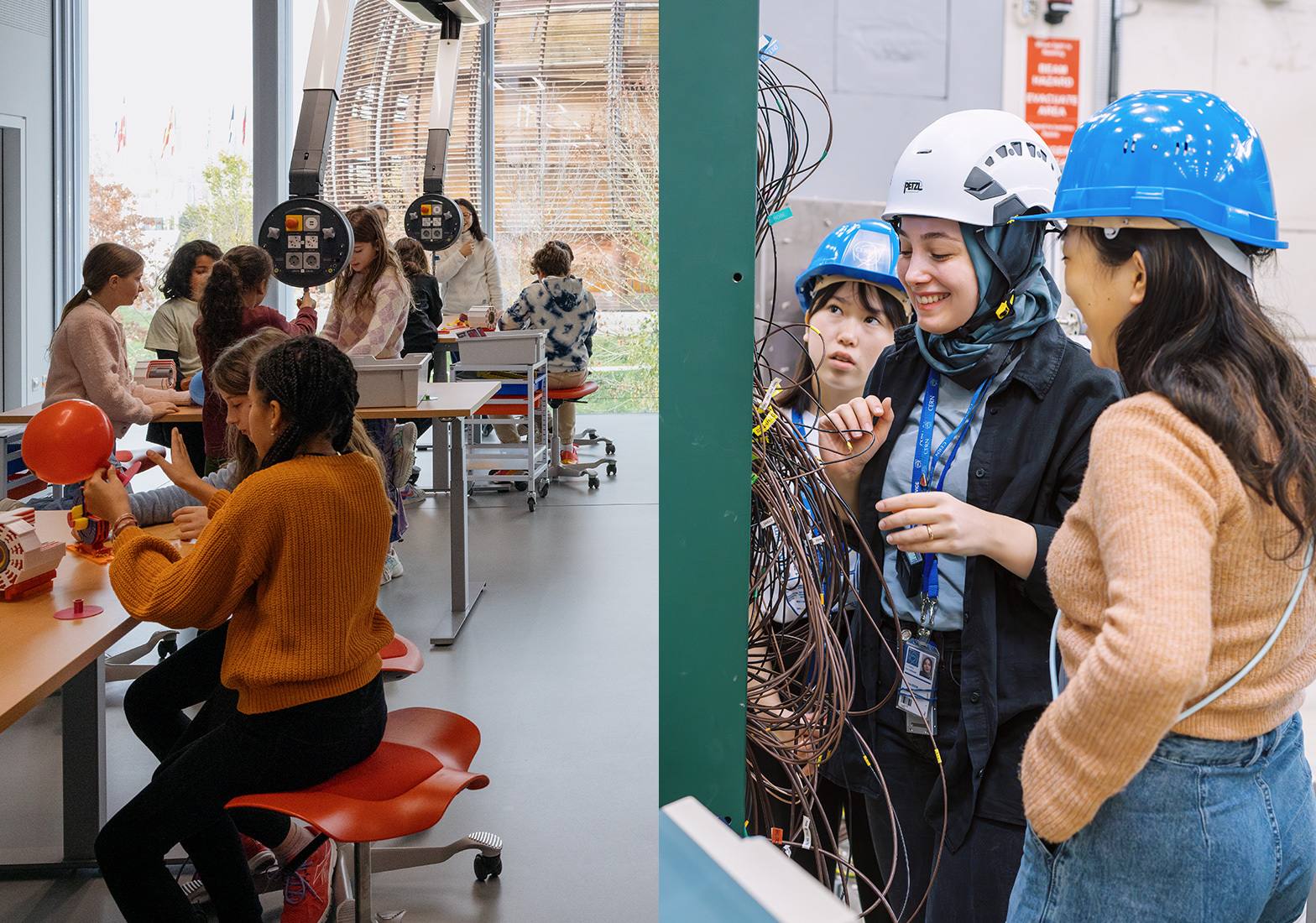
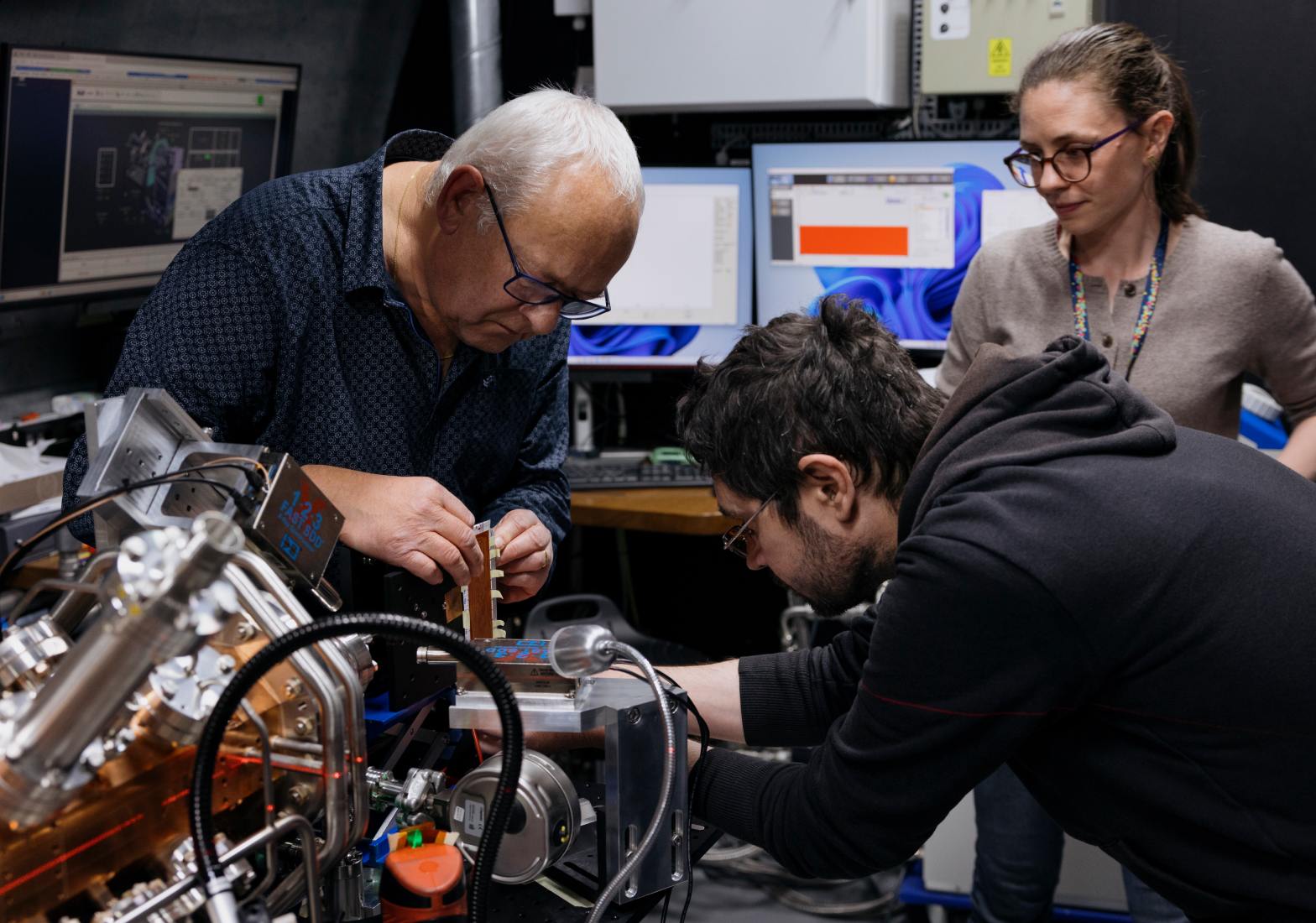
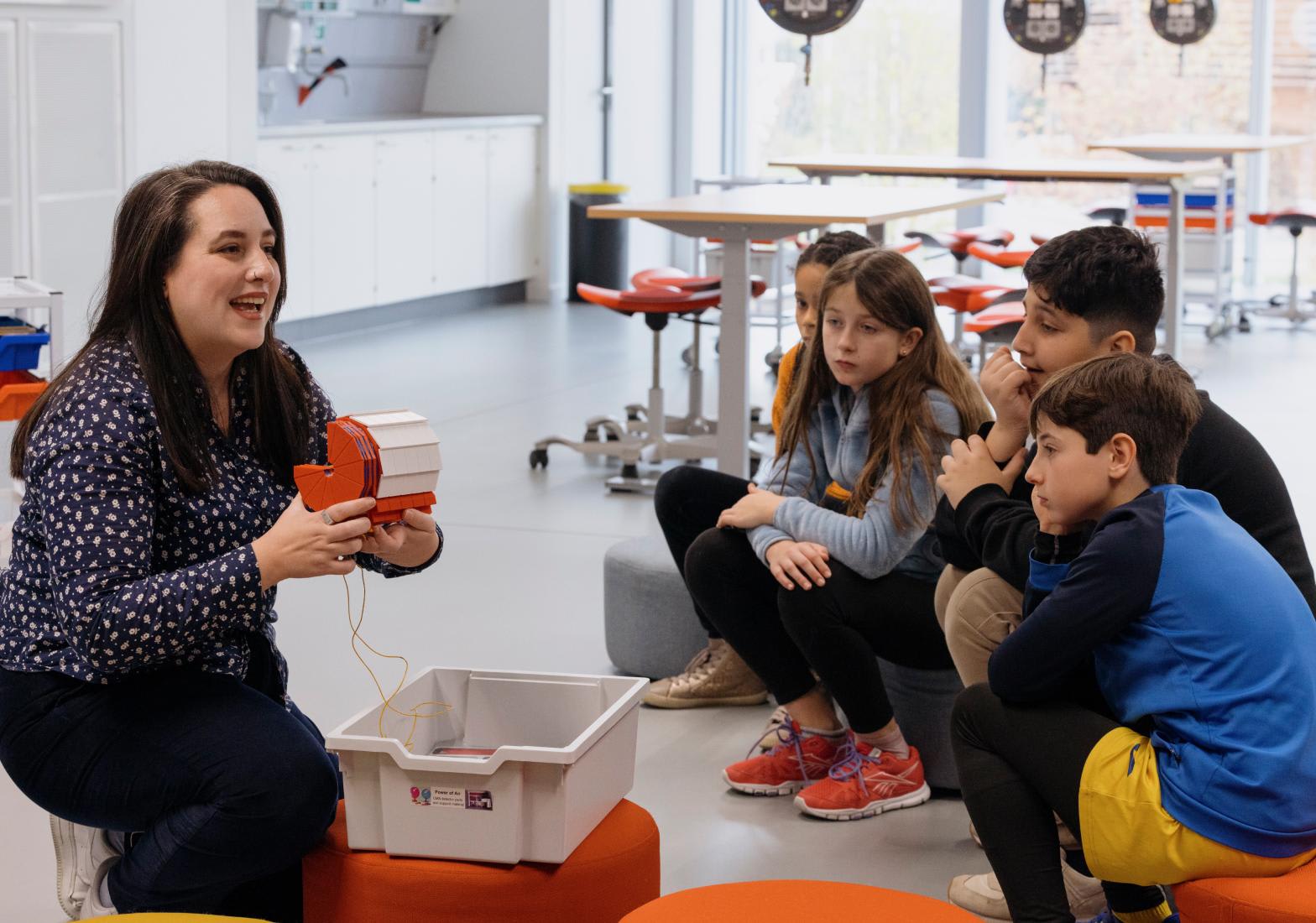
The research undertaken at CERN is part of a journey towards answering some of our deepest questions about the universe, from how it began to what it is made of. By inviting the world in to explore those questions together, the Science Gateway is revealing what humanity can achieve through international collaboration, creativity, innovation and precision.
Science Gateway guides like physicist Anastasia Tezari see the curiosity that sparks every day, and the power it has: “One of the students that comes here to do a workshop with us might come up with a very bright new idea that changes the way we see science and the way that we do things.”

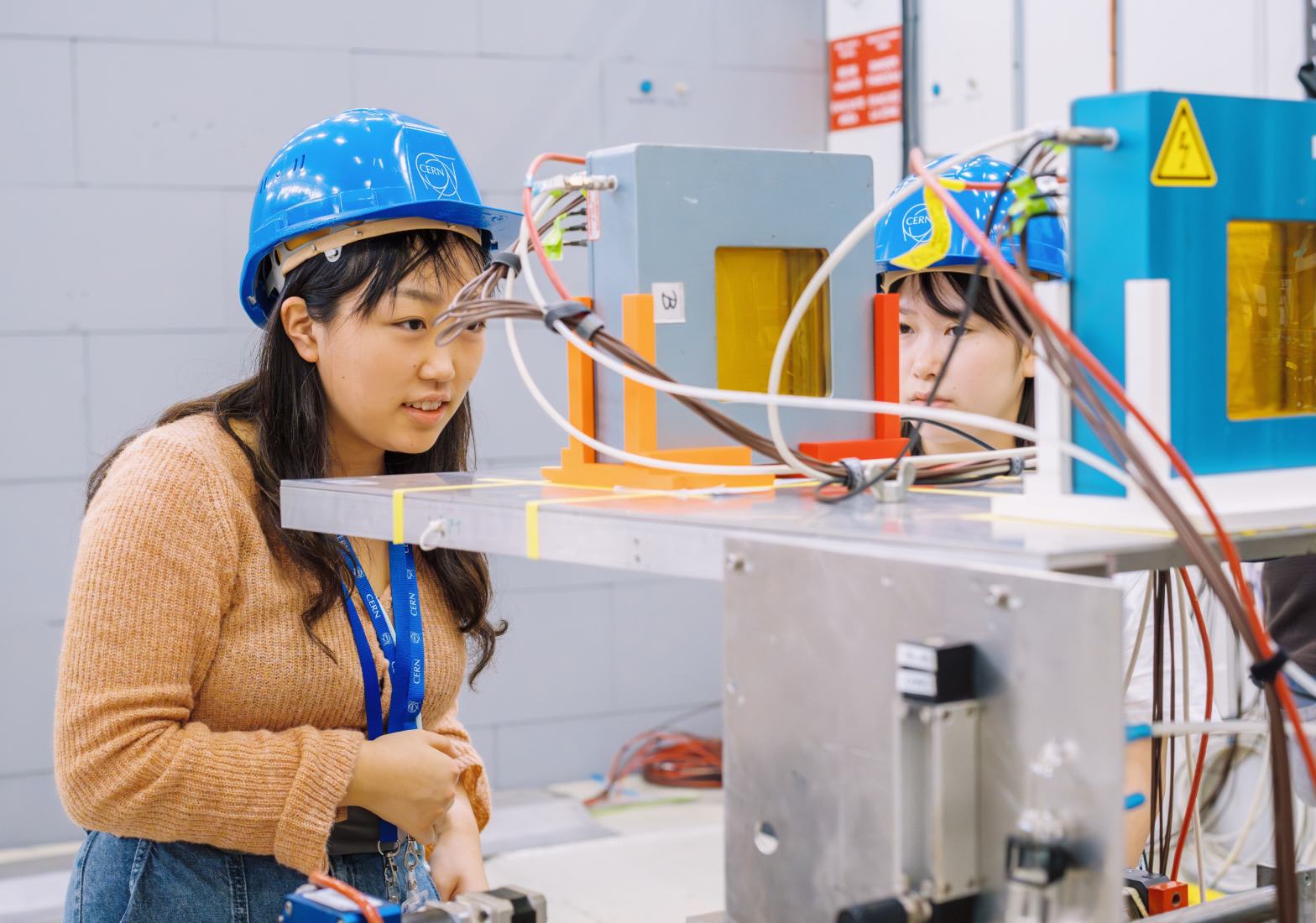
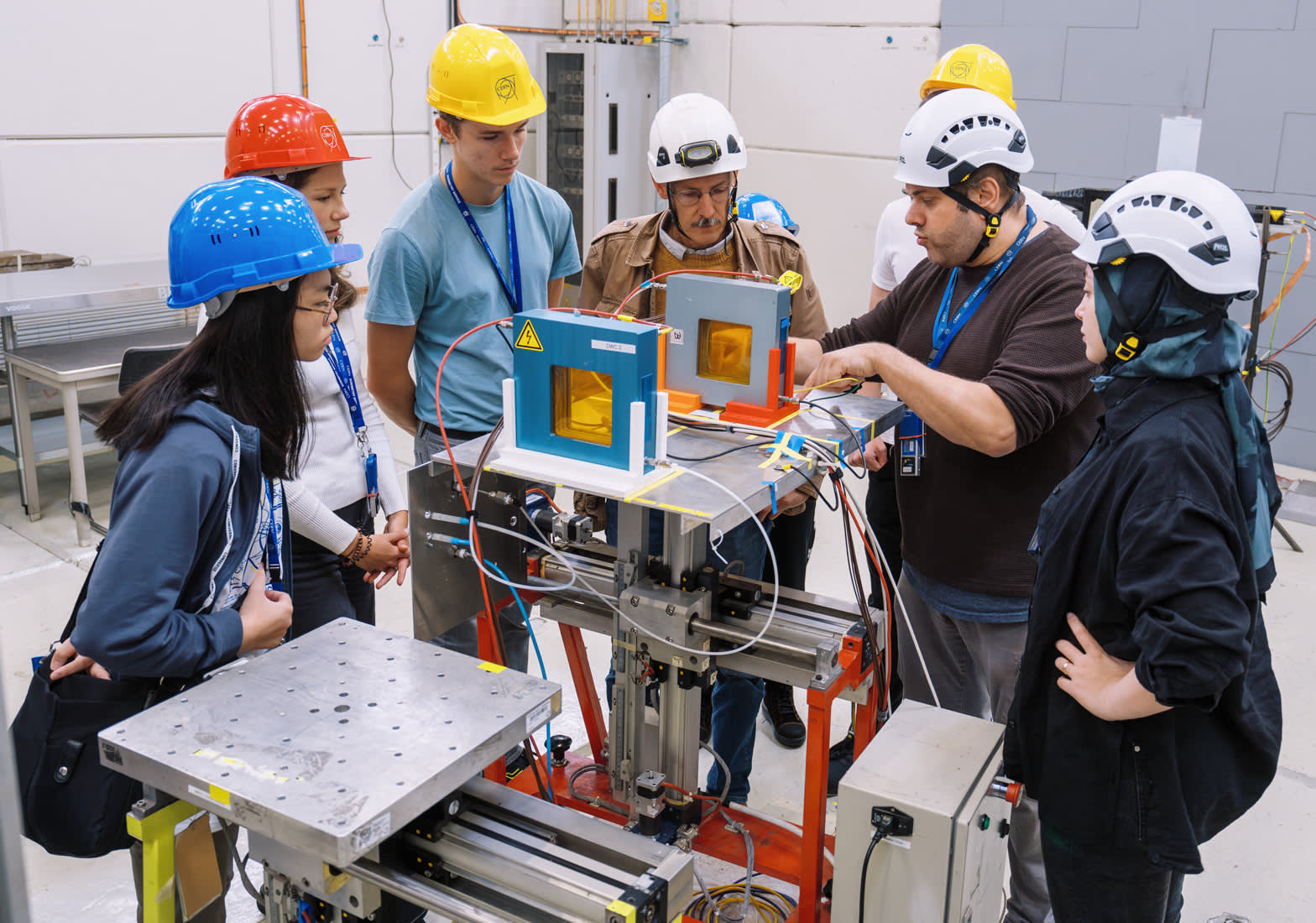
Becoming a particle physicist at CERN and getting to interact with the complex technology used there may seem impossible to most, but every year a few teams of future explorers do exactly that. The Beamline for Schools competition invites high school students worldwide to submit proposals for projects they want to run using a beamline: the trajectory of the beam of particles along a specific path of an accelerator.

Despite the challenge of coming up with a particle physics experiment, hundreds of groups enter the Beamline competition. “We’re always amazed at the quality of the proposals,” says Warakaulle. Reflecting the international culture and collaboration of CERN, the 2024 winners travelled from Japan, Estonia and the United States to undertake their projects.

They’re not only thinking about science here, they’re thinking about the Earth, they’re thinking about our future.
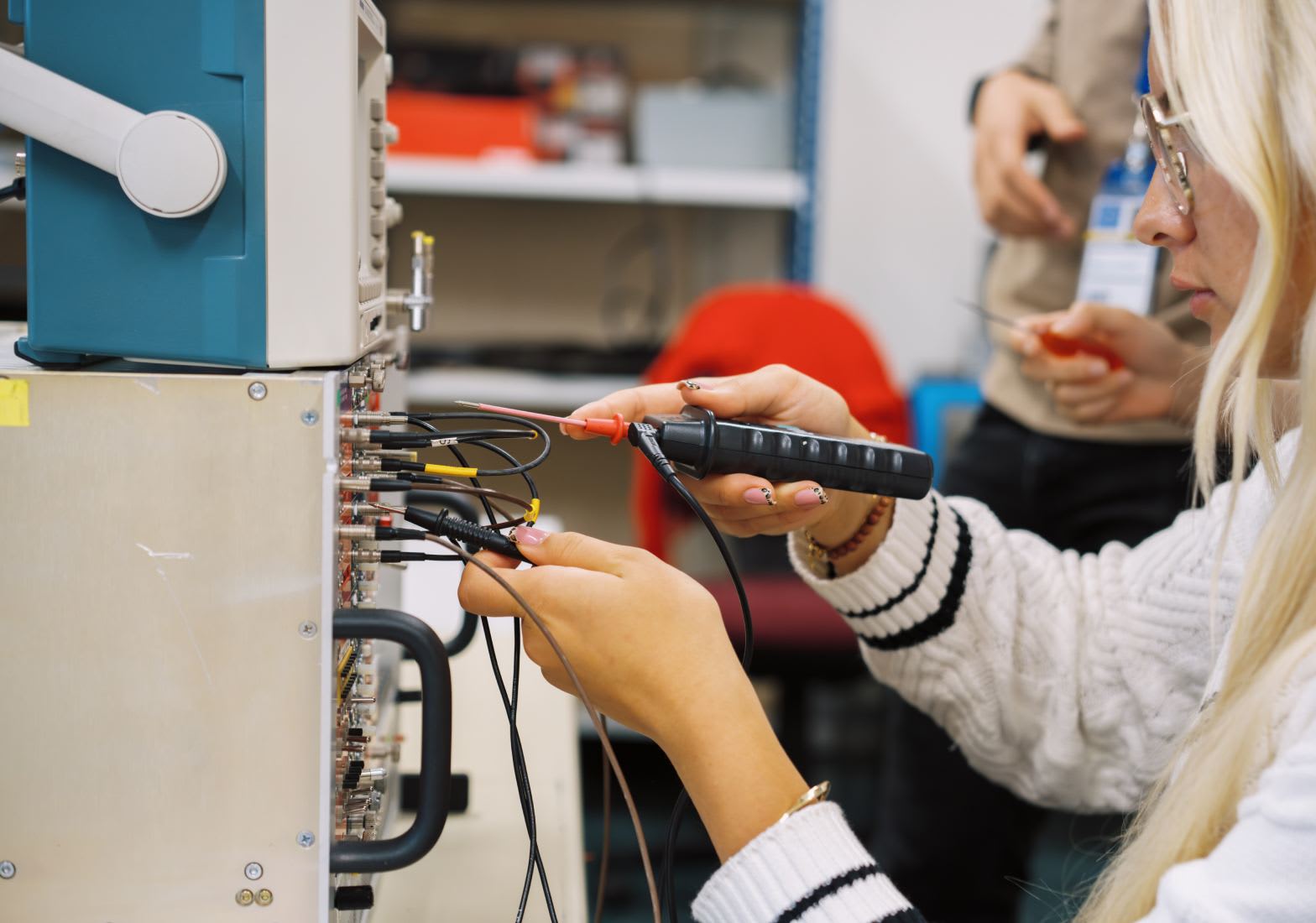
The teams arrived excited and nervous but quickly learned how to communicate and collaborate on their experiments. Support scientists helped them become familiar with the equipment, devices and software used at CERN, and gave them an understanding of the core skills it takes to be a particle physicist. “We are not cutting any corners for the students,” says Markus Joos, a technical engineer for the Beamline competition. “We expose them to all of the problems that professionals have to solve.” It is not easy, but as Joos points out, it gives them confidence that they can take on big challenges and inculcates a culture of precision and creativity in the students.

The Beamline for Schools project also gives students knowledge and skills that can be applied to whatever field they go into, inspiring them to pursue science for the benefit of the planet. “CERN is very conscious about the environment,” says Yuzuka Sasaki, one of the 2024 competition winners. “They’re not only thinking about science here, they’re thinking about the Earth, they’re thinking about our future.”
By supporting the CERN and Society foundation’s mission, Rolex continues to help forge the next generation of scientific explorers.